Showing posts with label Wells Fargo. Show all posts

Tuesday, January 28, 2014

World Savings Bank Loans Were Securitized Before Wachovia Merger

This is for you J
 by Neil Garfield and
Foreclosure Hamlet
World Savings Bank  was acquired by Wachovia Bank  which in turn was acquired by Wells Fargo.  We have previously reported here that we had no information regarding the actual securitization of loans had been originated by World Savings Bank.  Now we have that information.
The original opinion that I had written about was that virtually all of the loans originated by world savings bank were eventually securitized either by World Savings Bank directly,  or by Wachovia Bank after it acquired WSB, or by Wells Fargo bank after it acquired Wachovia Bank.  I am now more sure than ever that this is correct. Despite the public assurances during the mortgage meltdown WSB was in fact acting solely as an originator and not as a lender in many transactions. Many other transactions in which they were technically the lender were actually closed in anticipation of sale into the secondary market for securitization.
If you look at the link below, you will be able to see part of the information that has been sent to me. Apparently Foreclosure Hamlet has been ahead of me on this issue since some of the screenshots show that they are from that blog site. This opens the door to a whole set of cases in which Wells Fargo is insisting that it is the current creditor when in fact the loan was securitized and sold into what appeared to be a REMIC trust. of course it still remains an issue as to whether or not the money taken from investors for the purchase of mortgage bonds ever made it into the trust; so it remains an issue as to whether or not the trust is the creditor or the investors are the creditor.
Thus it remains an issue as to whether or not any of the alleged securitization participants can claim authority to act on behalf of the "trust beneficiaries" when the actual status of the entity (the trust) was ignored by those parties. It might be that they can only claim apparent authority as opposed to legal authority since the documents that were given to the investors show a structure that is very different from what was done in  the real world.

http://livinglies.files.wordpress.com/2014/01/world-savings-bank-remics.pdf


How did I know that that bottom feeder Deutsche Bank would also show up here :(

Wednesday, October 9, 2013

Wells Fargo: Insured Mortgages Still Being Foreclosed After Death Benefit is Paid to Bank


by Neil Garfield
In my newly formed practice and thanks to the diligent work of my partners at GGKW, we have discovered something that is over the top even by current standards in the current mortgage mess, to wit: servicers, banks and other entities are receiving complete payoffs of the mortgage upon the death of the insured homeowner and then either (1) getting the heirs to sign a modification agreement as though the debt was still owed or (2) FORECLOSING. (OR BOTH).
This is not accident. The Banks are rolling the dice. Many of the mortgages were in foreclosure or had been declared in default before the payment came in. Others were completely current. But the common factor is that the heirs did not know the policy existed because it was done at closing of the loan. The heirs either didn't know or forgot if they were told. Either way the Bank received payment directly or through one of the many agents in the securitization chain and continued to collect the money as though it was due. And the affidavit or testimony of the bank representative does not disclose the payment even though it was received, cashed and posted --- and that goes a long way toward showing that the corporate representative is neither corporate, a representative or with any knowledge.
This phenomenon is entirely different than the mortgage bond insurance that was also paid to the bank or one of its many agents in the securitization chain.
Why is this happening? Because the banks have elected not to make it a data input factor at LPS whose roulette wheel decides who to foreclose, when, how, and by whom regardless of the facts of the case. Nobody seems to know just how many homes were foreclosed on mortgages that were paid once by accidental death coverage or other PMI, and paid several times over by mortgage bond insurance and credit default swaps.
The bottom line is that if one of the alleged mortgagors (homeowners) has died, check thoroughly to see if an insurance policy may have been in force and if it is already paid off. It is obvious that the banks would rather pay the damages and sanctions when they caught than change their practices. The reason is that only 5% of foreclosures are contested. If they win most of those, which they have been doing, the benefits of taking multiple payments on the same mortgage are far outweighed by the occasional sanction or damage award.
Until Judges start assuming that they should be vigilant and instead of expedient, the tide will turn.

Thursday, October 3, 2013

Not Just a Bank issue

bank-contractor-lawsuits
Every day in neighborhoods across the country, low-paid workers with little oversight or training decide whether to break into someone else's home.
They are independent contractors working indirectly for banks, including Wells Fargo, JPMorgan Chase and Bank of America.
Mortgage agreements give these banks the right to enter abandoned properties, even those that are locked up, to secure them against the ravages of weather and to perform other simple repairs. But the contractors they hire to do this work sometimes force their way into houses and condominiums that are still occupied by their owners, changing out locks and removing what they find inside, including family heirlooms and other valuables.
"These companies don't ask the homeowner, don't go to a court to get permission to go inside," said Matthew Weidner, a consumer lawyer in St. Petersburg, Fla., who has handled several such cases. "They just send unlicensed, unregulated people who break down doors and do whatever they want."
Fed up with what they claim is a serious violation of their property rights -- and sometimes outright theft -- homeowners are fighting back.
In the past five years, people in 31 states have filed more than 250 lawsuits against the six largest national companies that contract directly with banks to inspect and repair homes in some stage of default or foreclosure, a Huffington Post review of court records found. The majority of these cases have come in the past 18 months.
The most-sued contractor is Safeguard Properties, based in Valley View, Ohio. The company, the subject of a previous HuffPost investigation and a new NBC News report, has been named in at least 135 lawsuits filed by homeowners alleging unwarranted break-ins.
Lawyers and other industry experts say growing awareness of the national scope of the problem has pushed more consumer complaints into courts. On Facebook and in online forums, homeowners swap tales of unauthorized break-ins and theft and solicit advice for how best to respond. Some attorneys who brought early cases against the industry are now sought for their expertise.
"I get these calls all the time," Weidner said.
One of his clients, Deanna Tedone, returned to her Tampa, Fla., home last year to discover that a contractor working for U.S. Bank had ripped huge holes in her walls, purportedly on a search for hazardous Chinese-made drywall.
The bank claims it was simply trying to protect its investment in the property, where Tedone and her husband had quit making monthly mortgage payments. But neither the bank nor the contractor, who worked for Five Brothers, based in Warren, Mich., had bothered to inform Tedone, who still owned the house, that such a radical procedure was in store, she claims in a lawsuit. Moreover, the contractor made a mess of it -- ripping out walls, leaving huge piles of possibly contaminated rubble strewn about, all without obtaining the proper permits from the city, she said.
The bank's action essentially killed any chance that she could sell her home at a short sale, and thus avoid the huge hit to her credit that a foreclosure deals, Tedone said.
"When you sell you have to disclose everything," she said. "And I don't know what was done."
Conflicts between contractors and homeowners are an outgrowth of a housing crisis that fueled rapid expansion in a previously little-noticed corner of the mortgage industry. In the past decade, the largest banks have increasingly outsourced their responsibilities to look after distressed real estate to a growing cadre of companies that do what is called property preservation, or field-services work.
Even now, with the housing market booming again in some areas, more than 3 million homes in some stage of default or foreclosure are subject to a monthly bank inspection, according to RealtyTrac, an online real estate company.
Disputes most often arise in instances where a borrower has missed a few payments, or is in the early stages of the foreclosure process. Sometimes owners just walk away from their homes, leaving it to the bank to mow lawns, fix broken windows or patch roofs.
Bank inspectors are sent each month to look for evidence of abandonment, but too often, say homeowners and even some of the contract workers themselves, they don't even get out of the car.
This is a result of lax supervision and regulation, critics say. Inspectors have little financial incentive to be cautious, often earning just a few dollars to inspect a property, after various other subcontractors have taken a cut of what the bank pays for inspections. On Craigslist, contractors solicit workers to inspect homes for as little as $1 or $2 each.
Bad inspections lead to work orders issued to clean out or lock up homes that are still inhabited by their rightful owners. Dozens of complaints allege that a resident was at work or on vacation when a contractor break-in occurred.
Adam Reynolds, a Naples, Fla., contractor who owned his own preservation company until last year, said he was routinely dispatched on such missions. "Countless times," he said, he would punch out a door lock and go inside a residence only to discover personal photos on the shelves and fresh food in the refrigerator.
Reynolds said he would immediately leave the property in such situations, as the contracting companies require in written guidelines. But others go ahead with these work orders, regardless of what they discover inside, homeowners and other contractors maintain. Indeed, some appear to see a fully stocked home as an opportunity to loot valuables.
In Chicago, Majorie Principe claims she returned home to find that a Safeguard contractor had taken her furniture, books, savings bonds and electronics.
In Cleveland, Bruce Brown claims a Safeguard contractor stole all of his clothes.
In Atlanta, Woldeab Medhin was arrested after he forced his way back into his home after a Safeguard contractor locked him out. The worker, as it turned out, had the address mixed up and was at the wrong house.
All have sued, seeking unspecified monetary compensation.
Safeguard is also the target of a fraud lawsuit filed earlier this month by Illinois Attorney General Lisa Madigan. Her office has received more than 300 complaints against the company in Illinois alone, she says.
More state actions could be coming. A spokeswoman for the Florida attorney general said her office was "reviewing" complaints regarding Safeguard.
In addition, plaintiffs' lawyers have named Safeguard in two class-action lawsuits: one filed in Chicago federal district court and another in Ohio, in Cuyahoga County state court.
In at least two instances, homeowners have alleged that the worker Safeguard hired to fix up or clean out a property had a lengthy criminal background.
For its part, Safeguard maintains that it strictly oversees and screens its subcontractors, performing background checks, auditing their work and requiring that they carry insurance. The company says the number of complaints against it is partly a function of its size: Safeguard completed 1.5 million work orders last year, the company said, making it far and away the biggest player in the industry.
A Safeguard spokeswoman declined to comment further on the Illinois investigation, or the homeowner lawsuits.
So far, there isn't much case history to suggest how this litigation will turn out. Some previous lawsuits have been dismissed, others have settled for undisclosed sums.
But Safeguard has shown it's willing to fight back. The company recently sued Kevin Kubovcik, a former employee who ran its complaint department until 2010. In April, Kubovcik provided HuffPost with records that showed he was logging about 85 incidents a month involving an alleged theft or break-in. The company claims that disclosure violated a confidentiality agreement and is seeking "in excess" of $25,000 from Kubovic.
It's also unclear how much legal liability the banks that hire companies like Safeguard have for such alleged abuses. In the past, banks have tried to shunt liability onto the contracting companies. But the $25 billion settlement struck with state attorney generals last year requires that five of the largest banks "perform appropriate due diligence" in examining any third-party contractors' "expertise, complaints and qualifications." Failure to do so could hypothetically lead to fines or other penalties. No public actions have been taken yet.
Sonia Wisniewska, a California homeowner, said she hopes heightened scrutiny of the property preservation industry will help yield a favorable result in her lawsuit against Wells Fargo and another large contracting company, Lender Processing Services, which she filed last month.
Wisniewska's case is one of the most unusual of those reviewed by HuffPost. She lives alone in a remote corner of Santa Barbara County, on a ranch miles from the nearest neighbor. One afternoon last year, Wisniewska angrily confronted a contract worker who snuck through the security gate guarding her long driveway.
When the contractor refused to leave, Wisniewska retrieved her shotgun and fired a warning shot into the sky. She was arrested on grounds that she had recklessly discharged a firearm.
Although the charges were eventually dismissed, Wisniewska claims the turmoil scared off a friend who was prepared to assume the ranch's deed and thus allow her to avoid foreclosure on a property she could no longer afford to keep.
The experience, Wisniewska said, was devastating. "I couldn’t get a job with the felony hanging over me. I lost weight. I had insomnia and depression," she said. "I don't want anyone else to have to go through this."

Wednesday, September 18, 2013

We have a victory!!

Judge Rules in Favor of Eminent Domain Over Wells Fargo

Underwater_Home_Pic_09_17_13
"Isn't this, as we say in the trade, a no-brainer?" said U.S. District Court Senior Judge Charles Breyer in court. In an effort to seize underwater mortgages through the use of eminent domain, the city of Richmond, Calif. has scored an early victory over Wells Fargo. Wells Fargo, who has staunchly opposed the use of eminent domain for economic recovery, saw their suit thrown out by a Federal judge because the case wasn’t far enough along. The city of Richmond has yet to determine how it will go about acting on the potential eminent domain seizure.
"Ripeness of these claims does not rest on contingent future events certain to occur but rather on future events that may never occur," said Breyer. "Plaintiffs are not, for example, challenging a proposal of the City Council that may or may not raise constitutional concerns depending on the contours of the final version—put simply, there may never be a 'final version.'"
The lawsuit filed by Wells Fargo on behalf of their investors against the city of Richmond, as well as Mortgage Resolution Partners, the group aiding the city with enacting change and stamping out the Bay Area housing crisis. Perhaps fearing a “domino effect” of sorts, Wells Fargo had been hoping to nip the eminent domain seizure in the bud, however; there are rumblings of the city of San Francisco looking to the Richmond eminent domain method in order to cure some of its own housing woes.
“Our strategies have been, let's be honest, ‘Let’s see what the federal government or the banking industry will do to help these folks,’” said San Francisco District Supervisor David Campos on the steps of City Hall in San Francisco last week. “We’ve waited long enough.”
Last week, the eminent domain plan began going into effect, with Richmond councilmembers voting in favor 4-3 of the motion. “Our residents have been badly harmed by this housing crisis,” Mayor Gayle McLaughlin reportedly said at the time. “The banks have been unwilling or unable to fix this situation, so the city is stepping in to provide a fix.”
The “fix” in question would essentially bring the principal amount closer to the current property’s value, allowing homeowners to more easily make payments on their mortgages. Mortgage Resolution Partners receives around $4,500 per loan as an “advisory fee.” The banks are angry because the city is essentially seizing their assets at a lower price than what they believe is fair, regardless of the perceived market value.

Sunday, August 18, 2013

Friend needs help

A friend needs help.. comment in box below if you can . Thanks everyone.

I NEED HELP Wells Fargo submitted a phony bogus note with a fake address and my husband's signature to FANNIE MAE in 2005, MY HUSBAND DIED IN 1998. This March, 2013 Fannie Mae sent a broker named Art Jenkins of Pocono advantage real estate and a STATE Trooper named Corporal Mahady to my door on March 15, 2013 asking me to leave my lawful residence with the legal address with NO PAPERWORK! these two threatened me harassed me and insulted me and my 21 year old daughter home on college break. I NEED HELP NOW -- been trying to get back my home, this is more than foreclosure fraud -- this is id theft, mail fraud, and insurance fraud and the FBI, the DOJ, the PA STATE Insurance dept. the PA State Attorney General and postal inspectors do nothing absolutely nothing

Saturday, August 17, 2013

Got some good reading herefor everyone

The enforcement actions were based on interagency examinations conducted in the fourth quarter of 2010. A summary of the findings of the interagency reviews is available in the Interagency Review of Foreclosure Policies and Practices, which was produced by the OCC, the Board of Governors of the Federal Reserve System, and the OTS.

Links to the OCC and former OTS Enforcement Actions (Issued April 2011):

Links to Enforcement Action Amendments for Servicers Entering the Independent Foreclosure Review Payment Agreement (Issued February 2013):

Just hit link in the blue 

Thursday, August 15, 2013

Your mortgage documents are fake!

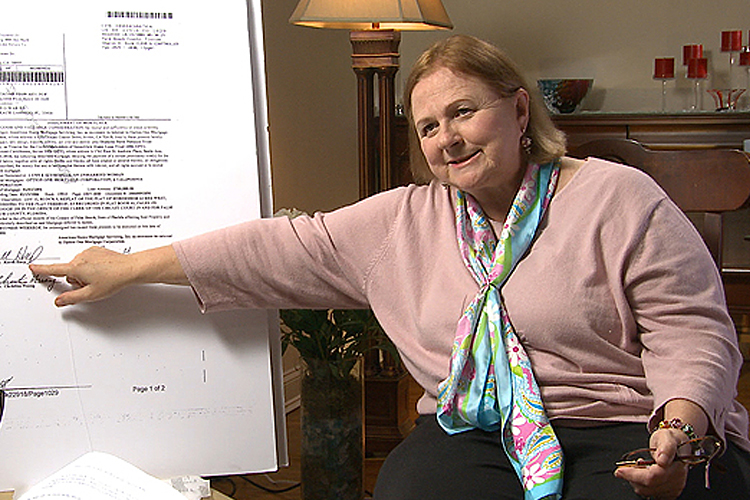
Your mortgage documents are fake!Lynn Szymoniak (Credit: CBS News/60 MInutes)
If you know about foreclosure fraud, the mass fabrication of mortgage documents in state courts by banks attempting to foreclose on homeowners, you may have one nagging question: Why did banks have to resort to this illegal scheme? Was it just cheaper to mock up the documents than to provide the real ones? Did banks figure they simply had enough power over regulators, politicians and the courts to get away with it? (They were probably right about that one.)
A newly unsealed lawsuit, which banks settled in 2012 for $95 million, actually offers a different reason, providing a key answer to one of the persistent riddles of the financial crisis and its aftermath. The lawsuit states that banks resorted to fake documents because they could not legally establish true ownership of the loans when trying to foreclose.
This reality, which banks did not contest but instead settled out of court, means that tens of millions of mortgages in America still lack a legitimate chain of ownership, with implications far into the future. And if Congress, supported by the Obama administration, goes back to the same housing finance system, with the same corrupt private entities who broke the nation’s private property system back in business packaging mortgages, then shame on all of us.
The 2011 lawsuit was filed in U.S. District Court in both North and South Carolina, by a white-collar fraud specialist named Lynn Szymoniak, on behalf of the federal government, 17 states and three cities. Twenty-eight banks, mortgage servicers and document processing companies are named in the lawsuit, including mega-banks like JPMorgan Chase, Wells Fargo, Citi and Bank of America.
Szymoniak, who fell into foreclosure herself in 2009, researched her own mortgage documents and found massive fraud (for example, one document claimed that Deutsche Bank, listed as the owner of her mortgage, acquired ownership in October 2008, four months after they first filed for foreclosure). She eventually examined tens of thousands of documents, enough to piece together the entire scheme.
A mortgage has two parts: the promissory note (the IOU from the borrower to the lender) and the mortgage, which creates the lien on the home in case of default. During the housing bubble, banks bought loans from originators, and then (in a process known as securitization) enacted a series of transactions that would eventually pool thousands of mortgages into bonds, sold all over the world to public pension funds, state and municipal governments and other investors. A trustee would pool the loans and sell the securities to investors, and the investors would get an annual percentage yield on their money.

advertisement

In order for the securitization to work, banks purchasing the mortgages had to physically convey the promissory note and the mortgage into the trust. The note had to be endorsed (the way an individual would endorse a check), and handed over to a document custodian for the trust, with a “mortgage assignment” confirming the transfer of ownership. And this had to be done before a 90-day cutoff date, with no grace period beyond that.
Georgetown Law professor Adam Levitin spelled this out in testimony before Congress in 2010: “If mortgages were not properly transferred in the securitization process, then mortgage-backed securities would in fact not be backed by any mortgages whatsoever.”
The lawsuit alleges that these notes, as well as the mortgage assignments, were “never delivered to the mortgage-backed securities trusts,” and that the trustees lied to the SEC and investors about this. As a result, the trusts could not establish ownership of the loan when they went to foreclose, forcing the production of a stream of false documents, signed by “robo-signers,” employees using a bevy of corporate titles for companies that never employed them, to sign documents about which they had little or no knowledge.
Many documents were forged (the suit provides evidence of the signature of one robo-signer, Linda Green, written eight different ways), some were signed by “officers” of companies that went bankrupt years earlier, and dozens of assignments listed as the owner of the loan “Bogus Assignee for Intervening Assignments,” clearly a template that was never changed. One defendant in the case, Lender Processing Services, created masses of false documents on behalf of the banks, often using fake corporate officer titles and forged signatures. This was all done to establish standing to foreclose in courts, which the banks otherwise could not.
Szymoniak stated in her lawsuit that, “Defendants used fraudulent mortgage assignments to conceal that over 1400 MBS trusts, each with mortgages valued at over $1 billion, are missing critical documents,” meaning that at least $1.4 trillion in mortgage-backed securities are, in fact, non-mortgage-backed securities. Because of the strict laws governing of these kinds of securitizations, there’s no way to make the assignments after the fact. Activists have a name for this: “securitization FAIL.”
One smoking gun piece of evidence in the lawsuit concerns a mortgage assignment dated Feb. 9, 2009, after the foreclosure of the mortgage in question was completed. According to the suit, “A typewritten note on the right hand side of the document states:  ‘This Assignment of Mortgage was inadvertently not recorded prior to the Final Judgment of Foreclosure… but is now being recorded to clear title.’”
This admission confirms that the mortgage assignment was not made before the closing date of the trust, invalidating ownership. The suit further argued that “the act of fabricating the assignments is evidence that the MBS Trust did not own the notes and/or the mortgage liens for some assets claimed to be in the pool.”
The federal government, states and cities joined the lawsuit under 25 counts of the federal False Claims Act and state-based versions of the law. All of them bought mortgage-backed securities from banks that never conveyed the mortgages or notes to the trusts. The plaintiffs argued that, considering that trustees and servicers had to spend lots of money forging and fabricating documents to establish ownership, they were materially harmed by the subsequent impaired value of the securities. Also, these investors (which includes the Treasury Department and the Federal Reserve) paid for the transfer of mortgages to the trusts, yet they were never actually transferred.
Finally, the lawsuit argues that the federal government was harmed by “payments made on mortgage guarantees to Defendants lacking valid notes and assignments of mortgages who were not entitled to demand or receive said payments.”
Despite Szymoniak seeking a trial by jury, the government intervened in the case, and settled part of it at the beginning of 2012, extracting $95 million from the five biggest banks in the suit (Wells Fargo, Bank of America, JPMorgan Chase, Citi and GMAC/Ally Bank). Szymoniak herself was awarded $18 million. But the underlying evidence was never revealed until the case was unsealed last Thursday.
Now that it’s unsealed, Szymoniak, as the named plaintiff, can go forward and prove the case. Along with her legal team (which includes the law firm of Grant & Eisenhoffer, which has recovered more money under the False Claims Act than any firm in the country), Szymoniak can pursue discovery and go to trial against the rest of the named defendants, including HSBC, the Bank of New York Mellon, Deutsche Bank and US Bank.
The expenses of the case, previously borne by the government, now are borne by Szymoniak and her team, but the percentages of recovery funds are also higher. “I’m really glad I was part of collecting this money for the government, and I’m looking forward to going through discovery and collecting the rest of it,” Szymoniak told Salon.
It’s good that the case remains active, because the $95 million settlement was a pittance compared to the enormity of the crime. By the end of 2009, private mortgage-backed securities trusts held one-third of all residential mortgages in the U.S. That means that tens of millions of home mortgages worth trillions of dollars have no legitimate underlying owner that can establish the right to foreclose. This hasn’t stopped banks from foreclosing anyway with false documents, and they are often successful, a testament to the breakdown of law in the judicial system. But to this day, the resulting chaos in disentangling ownership harms homeowners trying to sell these properties, as well as those trying to purchase them. And it renders some properties impossible to sell.
To this day, banks foreclose on borrowers using fraudulent mortgage assignments, a legacy of failing to prosecute this conduct and instead letting banks pay a fine to settle it. This disappoints Szymoniak, who told Salon the owner of these loans is now essentially “whoever lies the most convincingly and whoever gets the benefit of doubt from the judge.” Szymoniak used her share of the settlement to start the Housing Justice Foundation, a non-profit that attempts to raise awareness of the continuing corruption of the nation’s courts and land title system.
Most of official Washington, including President Obama, wants to wind down mortgage giants Fannie Mae and Freddie Mac, and return to a system where private lenders create securitization trusts, packaging pools of loans and selling them to investors. Government would provide a limited guarantee to investors against catastrophic losses, but the private banks would make the securities, to generate more capital for home loans and expand homeownership.
That’s despite the evidence we now have that, the last time banks tried this, they ignored the law, failed to convey the mortgages and notes to the trusts, and ripped off investors trying to cover their tracks, to say nothing of how they violated the due process rights of homeowners and stole their homes with fake documents.
The very same banks that created this criminal enterprise and legal quagmire would be in control again. Why should we view this in any way as a sound public policy, instead of a ticking time bomb that could once again throw the private property system, a bulwark of capitalism and indeed civilization itself, into utter disarray? As Lynn Szymoniak puts it, “The President’s calling for private equity to return. Why would we return to this?”
Update: This story previously suggested that banks settled this lawsuit with the federal government for $1 billion. That number is actually the total for a number of whistle-blower lawsuits that were folded into a larger National Mortgage Settlement. This specific lawsuit settled for $95 million. The post above has been changed to reflect this fact.

Wednesday, August 14, 2013

Break-up-the-big-banks fever hits the states


Its time to wake up our State Legislatures, and demand that they stand with others to bring down to big to fail! We also need to tell them private hedge funds trying to pass the fraudulent mortgage notes these banks had, are also fraud!!

A JPMorgan Chase Bank is pictured. | AP Photo
So far, only Maine and South Dakota have approved a Glass-Steagall resolution. | AP Photo
Elizabeth Warren’s effort to break up Wall Street banks through a return to Depression-era laws may not have a lot of support in Congress, but it has a sympathetic audience in state capitals across the country.
Lawmakers in at least 18 states have introduced resolutions this year calling on Congress to split up banking giants by putting back in place a wall between commercial banking, taking deposits and making loans, and investment banking, the world of traders and deal-makers.


Five years after the 2008 financial crisis and three years after enactment of the 2010 Dodd-Frank law, these symbolic resolutions show there is still a significant amount of public anger toward big banks.
And if these proposals gain enough traction in state legislatures, a growing number of members of Congress could feel pressure to get behind this effort to reinstate the 1933 Glass-Steagall Act — a cause Warren championed as a candidate and has reinvigorated as a freshman Massachusetts senator.

“We on the state level have been looking for an Elizabeth Warren — someone to carry this banner for us,” said Illinois state Rep. Mary Flowers, a Democrat who is the lead sponsor on a resolution introduced in May that urges Congress to reinstate Glass-Steagall, which was repealed in 1999.
Maryland Democratic state Del. Aisha Braveboy, who co-sponsored a resolution in her state, said: “She is the inspiration.”
So far, only Maine and South Dakota have approved a Glass-Steagall resolution. The states where lawmakers are pressing the issue include Mississippi, Pennsylvania, Alabama and California.
This week, the National Conference of State Legislatures will vote on a Glass-Steagall resolution introduced by Delaware Republican state Sen. Catherine Cloutier at its legislative summit in Atlanta.

Large banks aren’t taking the issue lightly.
Take Delaware — corporate home to the credit card operations of several banks.
When a group of bipartisan state senators introduced a resolution in June calling for a return to Glass-Steagall, four lobbyists — including those working on behalf of JPMorgan Chase and Bank of America — showed up at a hearing to denounce the idea. The resolution was shelved.
“I can’t say I was really surprised by the pushback,” said state Sen. Bruce Ennis, a Democrat who is one of the resolution’s co-sponsors. “They don’t want to rock the boat.”
Delaware state Sen. Robert Venables, a Democrat and another co-sponsor, added: “I’m 80 years old and I remember the aftermath of the Great Depression — this was why it was put in. And then the Clinton administration repealed it.”
Not all state lawmakers pushing for a breakup of big banks cite Warren, a liberal who came to prominence because of her calls to get tough on Wall Street, as an inspiration. Several are conservatives with a tea partier’s dislike of Wall Street and the taxpayer bailouts that resulted from the financial crisis.
In South Dakota, state Rep. Stace Nelson — a self-described tea partier with a “mean libertarian” streak — and other state lawmakers urged Senate Banking Committee Chairman Tim Johnson (D-S.D.) last month to support Glass-Steagall after the state Legislature adopted the measure earlier this year.
“People are gravely concerned about what has happened on Wall Street with the bailouts and the government getting involved,” said Nelson, who has formed a 2014 Senate exploratory committee.

Read more: http://www.politico.com/story/2013/08/break-up-the-big-banks-fever-hits-the-states-95481.html#ixzz2byMu8N8o

Monday, August 5, 2013

Why you should change banks

 Lets not leave out US BANK corp.. they have had there hands in full swing on foreclosures , and supplying private hedge funds with cash to buy your homes, most illegally.


9 Reasons To Change Banks – Switch From Wall Street

Reason #1: People Who Change Banks Like It

change banks satisfaction
People who bank with local lenders are far more satisfied than those who bank on Wall Street. (source)


Reason #2: The Wall Street Banks Are Still Too Big to Fail

if the biggest banks were too big to fail aligned


Reason #3: The Wall Street Banks Are Still Too Big to Jail

HSBC drug laundering


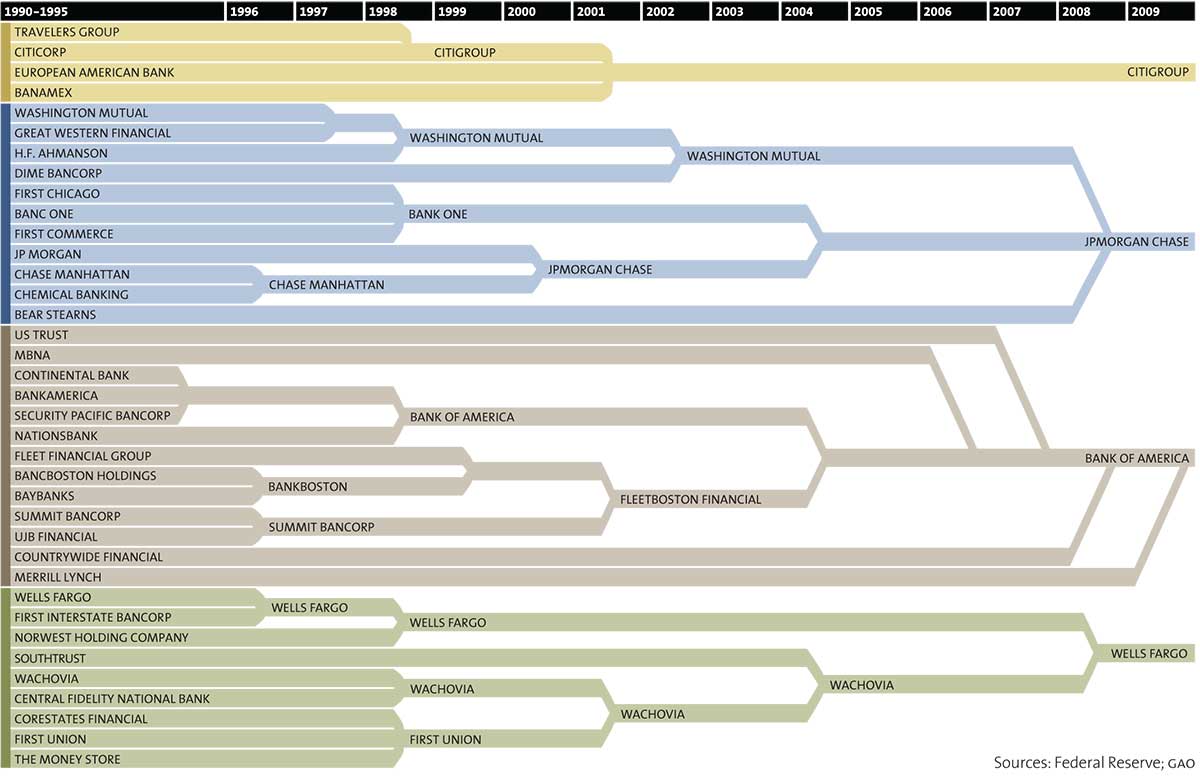
Reason #4: The Wall Street Banks Are Too Big to Manage

sheila bair bull by the horns too big to manage
The megabanks have grown tremendously over the past two decades, making it harder for them to properly manage all their various international pieces.
bank concentration timeline
SOURCE


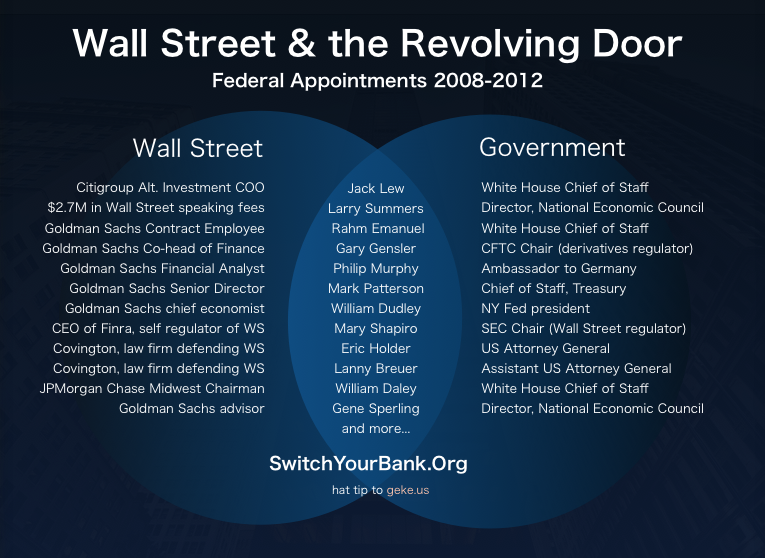
Reason #5: Wall Street Has Captured Washington

Wall Street revolving door


Reason #6: Wall Street Continues To Gamble With the Economy

Gambling on Wall Street lies behind boring, impenetrable names like credit default swaps, synthetic credit derivatives, and mortgage-back securities. All of these bets are types of derivatives. The financial crisis of 2008 occurred largely because these particular derivatives bets went bad. And yet the worldwide derivatives market continues to explode, from under $100 trillion in notional value in 2000 to over $700 trillion in 2011.
Worldwide Derivatives
SOURCE
What’s more, nearly half of the worldwide derivatives exposure is centered in the United States, and 95% of the total U.S. derivatives exposure comes from 5 megabanks.
wall street derivatives
SOURCE


Reason #7: Small Lenders Charge Less in Fees

wall street fees
Smaller lenders charge less in account fees, overdraft fees, and off-us ATM fees, as shown in a study from the PIRG Education Fund. According to the study, a substantive portion of small lenders belong to ATM networks that don’t charge anything if you use an ATM which doesn’t belong to your financial institution. That’s better than some megabanks offer.


Reason #8: Small Lenders Are Far More Likely to Offer Totally Free Checking

lower checking
Small financial institutions are more likely to offer totally free checking accounts. No loopholes or snags. Chart from the Institute of Local Self-Reliance.


Reason #9: Small Lenders Are Far Better For Your Community

If you want to support local job creation, one way to do it is to support local lenders.
bank local
Local lenders also make nearly 40% of small business loans, even though they only have 10% of total bank assets. (source)
bank local

Conclusion – Why Change Banks?

The problem with the megabanks is that they’re locked in a destructive cycle of being too big to manage, too big to fail, and too big to jail. They continue to have unpredictable, catastrophic losses. The losses lead inevitably to declarations of “too big to fail” (and bailouts). Being “too big to fail” means that the megabanks can’t be prosecuted without endangering the entire economy (or so they say), which makes the megabanks even bigger—and, again (back to the start!), too big to manage.
Therefore:
If you want to help end “too big to fail,” if you opposed the megabank bailouts, if you’re tired of megabanks getting away with crime, if you recognize that these institutions have become too big to manage, if you want to ensure that we never repeat the vast injustice at play in the 2008 crisis, then switch your bank.
You might be thinking, “Yes, okay, Wall Street makes the economy dangerous. But there are plenty of things that make the economy dangerous—more than I could ever effectively boycott.”
That’s why, even if you don’t think changing banks will make much difference for the fiscal health of the nation, you should still change banks for many of the personal advantages listed above. Either, way changing banks to a local lender is a good idea.

Global Destruction

Be the first to watch

http://www.toobighasfailed.org/2013/08/05/video-first-showing/

Monday, July 29, 2013

Friday, July 12, 2013

ELIZABETH WARREN AND JOHN MCCAIN TEAM UP TO REIGN IN BANKS

MSNBC had a segment today in which they interviewed Elizabeth Warren about a new set of laws reinstating the old style of Chinese walls. There are probably similar interviews on other channels with Senator Warren or Senator McCain and others. Just go to your favorite news channel and look it up. Their approach has bi partisan support because of its simplicity and its history. Historically it is merely a tune-up of the old laws to include definitions of new financial products that did not exist and were not adequately considered in the 1930's when EVERYONE AGREED THE RESTRICTIONS WERE NEEDED.
Bottom Line: RETURN TO THE BORING BANK SAFETY WITHOUT BOOMS AND BUSTS FROM 1930's into the 1990's: leading republicans and democrats are stepping out of gridlock into agreement. They want to stop Wall Street from access to checking and savings accounts for use in high risk investment banking because that is what brought us to the brink and some say brought us Into the abyss. And it would stop commercial banks that are depository institutions for your checking and savings accounts from using your money on deposit in ways where there is a substantial risk of loss that would require FDIC ((taxpayer) intervention.
Banking should be boring. In the years when restrictions were in place we only had one serious breach of banking practices --- the S&L Scandal in the 1980's. But it didn't threaten the viability of our entire economy and more than 800 people were serving prison terms when the dust cleared. Of course Bankers saw prison terms as an invasion of their business practices and regulation as unnecessary.
But the simple reason for bipartisan support is that the public is enraged that the mega banks (too big to fail) have GROWN 30% SINCE THE 2007-2008 while the people on Main Street are losing jobs, homes, businesses, families (divorce), thus stifling an already grievously injured economy because credit and cash are now scarce --- unless you are a mega bank that made hundreds of billions or even trillions of dollars because they were able to create an illusion (securitization) and at the same time, knowing it was an illusion, they bet heavily using extreme leverage on the illusion being popped.
They made it so complex as to be intimidating to even bank regulators. So no wonder borrowers could not realize or even contemplate that their mortgage was not a perfected lien, so they admitted it. Foreclosure defense attorneys made the same mistake and added to it by admitting the default without knowing who had paid what money that should have been allocated to the loan receivable account of the borrower that was supposedly converted for a note receivable from the borrower to a bond receivable from an asset pool that supposedly owned the note receivable account.
The complexity made it challenging to enforce regulations and laws. The complexity was hidden behind curtains for reasons of "privacy". The real reason is that as long as bankers know they are acting behind a curtain, they are subject to moral hazard. In this case it erupted into the largest PONZI scheme in human history.
And the proof of that just beginning to come out in the courts as judges are confronted with an absurd position --- where the banks "foreclosing" on homes and businesses want delays and the borrower wants to move the case alone; and where those same banks want a resolution (FORECLOSURE OR BUST) that ALWAYS yields the least possible mitigation damages, the least coverage for the alleged loss on the note because they would be liable for all the money they made on the bond. Just yesterday I was in Court asking for expedited discovery and the Judge's demeanor changed visibly when the Plaintiff seeking Foreclosure refused to agree to such terms. The Judge wanted to know why the defendant borrower wanted to speed the case up while the Plaintiff bank wanted to slow it down.
And because of all the multiple sales, the insurance funds, the proceeds of credit default swaps, because the initial money funding mortgages came from depositors ("investors"), and all the money from the Federal Reserve who is still paying off these bond receivables 100 cents to the dollar --- all that money amounting to far more than the loans to borrowers --- because it related to the bond receivable, the banks think they can withhold allocation of that money to the receivable until after foreclosure and avoid refunding all the excess payments to the borrower the investor and everyone else who paid money in this scheme. And the system is letting them because it is difficult to distinguish between the note receivable and the bond receivable and the asset pool that issued the bond to the actual lender/depositor.
Senators Warren and McCain and others want to put an end to even the illusion that such an argument would even be entertained. Support them now if not for yourselves then for your children and grandchildren.

Thursday, July 11, 2013

BANKS EDGE CLOSER TO THE ABYSS

I wish VT Judges had this knowledge , like the ones here and in NY.
For the second time in as many weeks a trial judge has ordered the pretender lender to execute a permanent modification based upon the borrowers total compliance with the provisions of the trial modification.This time Wells Fargo (Wachovia) was given the terms of the modification, told to put it in writing and file it. If they don't sanctions will apply just as they will be in the Florida Panhandle case we reported on last week.
Remember that before the trial modification begins the pretender lender is supposed to have done all the underwriting required to validate the loan, the value of the property, the income of the borrower etc. That is the responsibility of the lender under the Truth in Lending Act.
Of course we know that cases were instead picked at random with a cursory overview simply because there was no intention to ever give a permanent modification. Borrowers and their attorneys have known this for years. Government, always slow on the uptake, is starting to get restless as more and more Attorneys General are saying that the Banks are not complying with the intent or content of the agreement when the banks took TARP money.
The supreme irony of this case is that Wells Fargo didn't want the TARP money and was convinced to take it and accept the terms of HAMP because if only the banks that really need it took the money it was argued that this would start a run on the banks named that had to take TARP. The other ironic factoid here is that the whole issue of ownership of the loans blew up in the face of the government officers around the country that thought TARP was a good idea --- only to find out that the "toxic assets" (TARP - "Toxic Asset Relief Program") were not defaulting mortgages.
  1. So instead of telling the banks they were liars and going after them the way Teddy Roosevelt did 100 years ago, they changed the definition of toxic assets to mean mortgage bonds.
  2. This they thought would take care of it since the mortgage bonds were the evidence of "ownership" of the  "underlying" home loans.
  3. Then the government found out that the mortgage bonds were not failing, they were merely the subject of a declaration from the Master Servicer (a necessary and indispensable party to all mortgage litigation, in my opinion) that the value of the bond had fallen ,thus triggering payment from insurers, counterparties on credit default swaps etc to pay up to 100 cents on the dollar for each of the bonds ---
  4. which means the receivable account from the borrower had been either extinguished or reduced through third party payment.
  5. But by cheating the investors out of the insurance money (something the investors are taking care of right now in the courts), they thought they could keep saying the loans were in default and the mortgage bond had been devalued and thus the payment of insurance was legally valid.
  6. BUT the real truth is that the loans had never made into the asset pools that issued the mortgage bonds.
  7. So the TARP definitions were changed again to "whatever" and the money kept flowing to the banks while they were rolling in money from all sides --- investors, insurers, CDS counterparts, sales of the note to multiple asset pools (REMICs) and then sales of the note to the Federal Reserve for 100 cents on the dollar.
  8. This leaves the loan receivable account in many cases in an overpaid status if one applies generally accepted accounting principles and allocates the Federal, insurance and CDS money to the bonds and the "underlying" loans.
  9. So the Banks took the position that since the money was not coming in to cover the loans (because the loans were not in the asset pool that issued the mortgage bond and therefore the mortgage bond was NO evidence of ownership of the loan) that therefore they could apply the money any way they wanted, and that is where the government left it, to the astonishment and dismay of the the rest of the world. that is when world economies went into a nose dive.
The whole purpose of the mega banks in in entering into trial modification was actually to create the impression that the mega banks were modifying loans. But to the rest of us, the trial modification was supposed to to be last hurdle before the disaster was finally over. Comply with the payment schedule, insurance, taxes, and everything else, and it automatically becomes your permanent modification.
Not so, according to Bank of America, Wells Fargo, Chase, Citi and their brothers in arms in the false scheme of securitization. According to them they could keep the money paid by the borrower to be approved for the trial modification, keep the money paid by the borrower to comply with the terms of the trial modification and then the banks could foreclose making up any excuse they wanted to deny the permanent modification. The sole straw upon which their theory rests is that they were only obligated to "consider" the modification; according to them they were NEVER required to make it such that the modification would become permanent unless the bank expressly said so, which in most cases it does not.
When you total it all up, the Banks received a minimum of $2.50 for each loan "out there" regardless of who owns it. Under the terms of the promissory note signed by the borrower, that means the account is paid in full and then some. If the investor has not stepped up to file a competing claim against the borrower's new claim for overpayment, then the entire overage should be paid to the borrower.
The Banks want to say, like they did to the government, that the trial modification is nothing despite the presence of an offer, acceptance and consideration. To my knowledge there are at least two judges in Florida who think that is a ridiculous argument and knowing how judges talk amongst themselves behind closed doors, I would expect more of these decisions. If the borrower applies for and is approved for trial modification and they comply with the trial provisions, a contract is formed.
The foreclosure defense attorney in Palm Beach County argued SIMPLE contract. And the Judge agreed. My thought is that if you are in a trial modification get ready to hire that attorney or some other one who gets it and can cover your geographical area. Once that last payment is made, and in most cases, the payment is continued long after the trial modification period is officially over, the Bank has no equitable or legal right to deny the permanent modification.
The only caveat here is whether the Judge was correct in stating the amount of principal due without hearing evidence on third party payments and ownership of the loan. WHY WOULD THE BANK WANT LESS MONEY IN FORECLOSURE RATHER THAN MORE MONEY IN A MODIFICATION? The answer is that out of the $2.50 they received for the loan, they would be required to refund $2.50 because the Bank was supposed to be an intermediary, not a principal in the transaction. So the balance quoted by the judge without evidence was quite probably wrong by a mile.
If there is any balance it is most likely a small fraction of the original principal due on the promissory note. And, as we have been saying for years, it is most likely NOT due to the party that is entering into the modification. This last point is troubling but "apparent authority" doctrines might cover the problem.
Every time a loan does NOT go into foreclosure, the Banks' representation of defaults and the value of the loan (in order to trigger insurance and other third party payments)  come under question and the prospect of disaster for the Bank rises, to wit:  refunding trillions of dollars in insurance and CDS money as well as money received from co-obligors on the bond (the finished product after the note was moved through the manufacturing process of a false securitization scheme).
Every time a loan is found NOT to have actually been purchased by the asset pool (REMIC, Trust etc.) because there was no money in the asset pool and that the investors merely have an equitable right to claim the note and mortgage under constructive trust or resulting trust theories, the validity of the mortgage encumbrance fades to black. There is no such thing as an equitable mortgage lien or an equitable lien of any sort. And there is plenty of good sense and many law review articles as well as case decisions that explain why that is true.
PRACTICE HINT FOR ATTORNEYS: Whether you are litigating or negotiating, send a preservation letter to every possible party or witness that might be involved. That way when you ask for production, they can't say they destroyed or lost it without facing severe consequences. It might even stop the practice of the Banks trashing all documents periodically as has been disclosed in the whistle-blower affidavits from BOA and other banks.

Tuesday, July 2, 2013

CEO get on the phone

I think if a bank owns your loan , or you have money  invested with them , if you call and ask to speak with the bank CEO, he gets on the phone.
Good find Ms. Kennedy :)

Contact Info For Wells Fargo CEO John Stumpf And Friends

Here’s some info we dug up that can help you contact some higher ups at Wells Fargo if you’ve tried regular customer service and escalating to supervisors and it’s not working out.First read this post about how to contact and conduct yourself when using executive customer service.
1) Call 866-249-3302. Ask to be transferred “to the office of Mr. Stumpf.” Once you reach the secretary or switchboard operator, say the following:
“Hello, my name is ________. I’m one of your customers, and I was hoping to speak to Mr. Stumpf because I’m really getting frustrated with getting a problem resolved, and I know that your company doesn’t want me to feel that way.”
2) You can also send some of their busy executives a well-written and cogent complaint letter (here’s how to write one):
John.G.Stumpf@wellsfargo.com, Howard.I.Atkins@wellsfargo.com, James.M.Strother@wellsfargo.com, Richard.D.Levy@wellsfargo.com, Mark.C.Oman@wellsfargo.com, David.A.Hoyt@wellsfargo.com, David.M.Carroll@wellsfargo.com, patricia.r.callahan@wellsfargo.com, kevin.a.rhein@wellsfargo.com, Carrie.L.Tolstedt@wellsfargo.com, AVID.MODJTABAI@wellsfargo.com, BoardCommunications@wellsfargo.com
If you prefer using written correspondence, particularly when sending letters by certified mail provides a trail that they actually got your letter, these addresses may come in handy:
Corporate Offices
Wells Fargo
420 Montgomery Street
San Francisco, CA 94104
Home Mortgage
Wells Fargo Home Mortgage
P.O. Box 10335
Des Moines, IA 50306-0335
Home Equity
Wells Fargo Home Equity-Internet
MAC S3837-020
2nd Floor
2222 W Rose Garden Lane
Phoenix, AZ 85027-2644
Online Customer Service
Wells Fargo Customer Service
P.O. Box 4132
Concord, CA 94524-4132
Wells Fargo Financial
Wells Fargo Financial, Inc.
Customer Service F4008-080
800 Walnut
Des Moines, IA 50309

Monday, June 10, 2013

money talks bullshit walks

Wells Fargo has been acquitted by a jury of giving kickbacks to a real estate firm in exchange for mortgage business.
A group of homeowners who sued the nation's fourth-biggest bank and the real estate firm Long & Foster real estate failed to prove that Wells Fargo funneled referral fees to Long & Foster, a Maryland jury found last Friday.
The verdict ended a class-action lawsuit filed in 2007 with the U.S. District Court in Baltimore by homeowners who obtained mortgages from Prosperity Mortgage, an entity the homeowners alleged that Wells Fargo and Long & Foster formed to facilitate the collection of fees and payments.
Wells Fargo solicited loan originations from Long & Foster by promising that the real estate firm could collect additional funds for loan applications it referred to the bank, according to the lawsuit.
Both companies denied the allegations.
"We thought it was a very unfair lawsuit to begin with and we clearly feel vindicated that we were doing it the right way," Tim Wilson, a Long & Foster spokesman, told American Banker. "Our customers are getting great service, and we think the jury affirmed that."
A Wells Fargo spokesman did not respond to a request for comment. Lawyers for the homeowners also did not respond to a request for comment.
For their part, the homeowners alleged that Wells Fargo and Long & Foster overcharged them for fees attributable to Prosperity Mortgage that instead were split between the companies in violation of the Real Estate Settlement Procedures Act, which governs information about the cost of mortgage settlement that lenders provide to borrowers.
Denise Minter, a homeowner from Baltimore who settled on her house in 2006, charged that Long & Foster required her to use Prosperity as her lender and that at closing, Wells Fargo, which funded her loan, withheld $945 in fees that the bank and realtor later divided between themselves.
Jason and Rachel Alborough made similar charges in connection with a home purchase in 2007 they said required them to pay $777 in allegedly illegal fees, while Lizbeth Binks alleged she paid $2,382 in fees attributable to Prosperity that were later divided between Wells Fargo and Long & Foster.
The borrowers charged that paperwork they received in connection with their loan originations misled them about the services Prosperity provided.


I wonder.. hmmmm... how much was paid to the jurors  and court to swallow this one from Wells? A court case since 2007 (6 years) and they couldn't of found these answers sooner.. I smell a RAT! Wells Fargo didn't fund these loans back than and they damn well know it, INVESTORS  funded these loans.. you know the ones Wells Fargo.. you kept their money .

Monday, May 27, 2013

This Bank theft is happening now

This is happening now to this woman Joann Kennedy in PA.

Please lets help her, seeings how her own elected officials have failed.

http://www.trulia.com/property/3087323231-4293-Hillendale-Rd-Bangor-PA-18013?ecampaign=con_rlt_post_lead_qc_prop_fr&eurl=www.trulia.com%2Fproperty%2F3087323231-4293-Hillendale-Rd-Bangor-PA-18013
This is a picture of my home  it's legal address is 4293 first Terrace, Bangor PA  --  the fake address is the 4293 Hillendale road address  this property address is located in the Hess cornfield off of TR 713.   The Hess farm is very big over 100 acres and been in the Hess family for over 200 years.   What has happened  is that Wells Fargo  submitted a Wells Fargo note  to
http://www.trulia.com/property/3087323231-4293-Hillendale-Rd-Bangor-PA-18013?ecampaign=con_rlt_post_lead_qc_prop_fr&eurl=www.trulia.com%2Fproperty%2F3087323231-4293-Hillendale-Rd-Bangor-PA-18013
This is a picture of my home  it's legal address is 4293 first Terrace, Bangor PA  --  the fake address is the 4293 Hillendale road address  this property address is located in the Hess cornfield off of TR 713.   The Hess farm is very big over 100 acres and been in the Hess family for over 200 years.   What has happened  is that Wells Fargo  submitted a Wells Fargo note  to Fannie Mae  in 2005  with this address  4293 Hillendale Road (Public records manipulation... and my husband's signature.  My husband died in 1998   --  id theft.  I am wondering  if  the mortgage crisis perpetrated by these greedy banksters  have   devised a twisted form  of the straw purchase.  Taking  a note,  fraudulently prepared or not (highly unlikely) swapping it for gains/commissions  in the secularization trust pools  and then tanking the homeowner  and destroying the credit rating  and stealing the house still while  holding on to the investment.  Matt Weidner explains  when does a non-negotiable instrument  become a negotiable security.....  albeit the same mortgage note?
This above scenario has just happened to me.  And when I have brought it to the attention of the DOJ,  the PA AG,  the FHFA OIG,  elected federal congress people  and state agencies I was ignored,  threatened by PA STATE Police in Belfast,  my home has been broken into 3 times while I was at work  I have nothing now  nothing  all stolen with no paperwork   just recently  this Saturday.  May 25, 2013.  
  in 2005  with this address  4293 Hillendale Road (Public records manipulation... and my husband's signature.  My husband died in 1998   --  id theft.  I am wondering  if  the mortgage crisis perpetrated by these greedy banksters  have   devised a twisted form  of the straw purchase.  Taking  a note,  fraudulently prepared or not (highly unlikely) swapping it for gains/commissions  in the secularization trust pools  and then tanking the homeowner  and destroying the credit rating  and stealing the house still while  holding on to the investment.  Matt Weidner explains  when does a non-negotiable instrument  become a negotiable security.....  albeit the same mortgage note?
This above scenario has just happened to me.  And when I have brought it to the attention of the DOJ,  the PA AG,  the FHFA OIG,  elected federal congress people  and state agencies I was ignored,  threatened by PA STATE Police in Belfast,  my home has been broken into 3 times while I was at work  I have nothing now  nothing  all stolen with no paperwork   just recently  this Saturday.  May 25, 2013.  


I will post more as this goes -- lets write to the PA GOV and PA AG to help stop this abuse.

Sunday, May 26, 2013

A salute to our Goverment officials

To our Government officials who are suppose to watch over us and not their pockets.. we salute you ..


WASHINGTON — Bank lobbyists are not leaving it to lawmakers to draft legislation that softens financial regulations. Instead, the lobbyists are helping to write it themselves.
One bill that sailed through the House Financial Services Committee this month — over the objections of the Treasury Department — was essentially Citigroup’s, according to e-mails reviewed by The New York Times. The bill would exempt broad swathes of trades from new regulation.
In a sign of Wall Street’s resurgent influence in Washington, Citigroup’s recommendations were reflected in more than 70 lines of the House committee’s 85-line bill. Two crucial paragraphs, prepared by Citigroup in conjunction with other Wall Street banks, were copied nearly word for word. (Lawmakers changed two words to make them plural.)

The lobbying campaign shows how, three years after Congress passed the most comprehensive overhaul of regulation since the Depression, Wall Street is finding Washington a friendlier place.
The cordial relations now include a growing number of Democrats in both the House and the Senate, whose support the banks need if they want to roll back parts of the 2010 financial overhaul, known as Dodd-Frank.
This legislative push is a second front, with Wall Street’s other battle being waged against regulators who are drafting detailed rules allowing them to enforce the law.
And as its lobbying campaign steps up, the financial industry has doubled its already considerable giving to political causes. The lawmakers who this month supported the bills championed by Wall Street received twice as much in contributions from financial institutions compared with those who opposed them, according to an analysis of campaign finance records performed by MapLight, a nonprofit group.
In recent weeks, Wall Street groups also held fund-raisers for lawmakers who co-sponsored the bills. At one dinner Wednesday night, corporate executives and lobbyists paid up to $2,500 to dine in a private room of a Greek restaurant just blocks from the Capitol with Representative Sean Patrick Maloney, Democrat of New York, a co-sponsor of the bill championed by Citigroup.
Industry officials acknowledged that they played a role in drafting the legislation, but argued that the practice was common in Washington. Some of the changes, they say, have gained wide support, including from Ben S. Bernanke, the Federal Reserve chairman. The changes, they added, were in an effort to reach a compromise over the bills, not to undermine Dodd-Frank.
“We will provide input if we see a bill and it is something we have interest in,” said Kenneth E. Bentsen Jr., a former lawmaker turned Wall Street lobbyist, who now serves as president of the Securities Industry and Financial Markets Association, or Sifma.
The close ties hardly surprise Wall Street critics, who have long warned that the banks — whose small armies of lobbyists include dozens of former Capitol Hill aides — possess outsize influence in Washington.
“The huge machinery of Wall Street information and analysis skews the thinking of Congress,” said Jeff Connaughton, who has been both a lobbyist and Congressional staff member.
Lawmakers who supported the industry-backed bills said they did so because the effort was in the public interest. Yet some agreed that the relationship with corporate groups was at times uncomfortable.
“I won’t dispute for one second the problems of a system that demands immense amount of fund-raisers by its legislators,” said Representative Jim Himes, a third-term Democrat of Connecticut, who supported the recent industry-backed bills and leads the party’s fund-raising effort in the House. A member of the Financial Services Committee and a former banker at Goldman Sachs, he is one of the top recipients of Wall Street donations. “It’s appalling, it’s disgusting, it’s wasteful and it opens the possibility of conflicts of interest and corruption. It’s unfortunately the world we live in.”
The passage of the Dodd-Frank Act, which took aim at culprits of the financial crisis like lax mortgage lending and the $700 trillion derivatives market, ushered in a new phase of Wall Street lobbying. Over the last three years, bank lobbyists have blitzed the regulatory agencies writing rules under Dodd-Frank, chipping away at some regulations.
But the industry lobbyists also realized that Congress can play a critical role in the campaign to mute Dodd-Frank.
The House Financial Services Committee has been a natural target. Not only is it controlled by Republicans, who had opposed Dodd-Frank, but freshmen lawmakers are often appointed to the unusually large committee because it is seen as a helpful base from which they can raise campaign funds.
For Wall Street, the committee is a place to push back against Dodd-Frank. When banks and other corporations, for example, feared that regulators would demand new scrutiny of derivatives trades, they appealed to the committee. At the time, regulators were completing Dodd-Frank’s overhaul of derivatives, contracts that allow companies to either speculate in the markets or protect against risk. Derivatives had pushed the insurance giant American International Group to the brink of collapse in 2008. The question was whether regulators would exempt certain in-house derivatives trades between affiliates of big banks.
As the House committee was drafting a bill that would force regulators to exempt many such trades, corporate lawyers like Michael Bopp weighed in with their suggested changes, according to e-mails reviewed by The Times. At one point, when a House aide sent a potential compromise to Mr. Bopp, he replied with additional tweaks.
In an interview, Mr. Bopp explained that he drafted the proposal at the request of Congressional aides, who expressed broad support for the change. The proposal, he explained, was a “compromise” that was actually designed to “limit the scope” of the exemption.
“Everyone on the Hill wanted this bill, but they wanted to make sure it wasn’t subject to abuse,” said Mr. Bopp, a partner at the law firm Gibson, Dunn who was representing a coalition of nonfinancial corporations that use derivatives to hedge their risk.
Ultimately, the committee inserted every word of Mr. Bopp’s suggestion into a 2012 version of the bill that passed the House, save for a slight change in phrasing. A later iteration of the bill, passed by the House committee earlier this month, also included some of the same wording.
And when federal regulators in April released a rule governing such trades, it was significantly less demanding than the industry had feared, a decision that the industry partly attributed to pressure stemming from Capitol Hill.
Citigroup and other major banks used a similar approach on another derivatives bill. Under Dodd-Frank, banks must push some derivatives trading into separate units that are not backed by the government’s insurance fund. The goal was to isolate this risky trading.
The provision exempted many derivatives from the requirement, but some Republicans proposed striking the so-called push out provision altogether. After objections were raised about the Republican plan, Citigroup lobbyists sent around the bank’s own compromise proposal that simply exempted a wider array of derivatives. That recommendation, put forth in late 2011, was largely part of the bill approved by the House committee on May 7 and is now pending before both the Senate and the House.
Citigroup executives said the change they advocated was good for the financial system, not just the bank.
“This view is shared not just by the industry but from leaders such as Federal Reserve Chairman Ben Bernanke,” said Molly Millerwise Meiners, a Citigroup spokeswoman.
Industry executives said that the changes — which were drafted in consultation with other major industry banks — will make the financial system more secure, as the derivatives trading that takes place inside the bank is subject to much greater scrutiny.
Representative Maxine Waters, the ranking Democrat on the Financial Services Committee, was among the few Democrats opposing the change, echoing the concerns of consumer groups.
“The bill restores the public subsidy to exotic Wall Street activities,” said Marcus Stanley, the policy director of Americans for Financial Reform, a nonprofit group.
But most of the Democrats on the committee, along with 31 Republicans, came to the industry’s defense, including the seven freshmen Democrats — most of whom have started to receive donations this year from political action committees of Goldman Sachs, Wells Fargo and other financial institutions, records show.
Six days after the vote, several freshmen Democrats were in New York to meet with bank executives, a tour organized by Representative Joe Crowley, who helps lead the House Democrats’ fund-raising committee. The trip was planned before the votes, and was not a fund-raiser, but it gave the lawmakers a chance to meet with Wall Street’s elite.
In addition to a tour of Goldman’s Lower Manhattan headquarters, and a meeting with Lloyd C. Blankfein, the bank’s chief executive, the lawmakers went to JPMorgan’s Park Avenue office. There, they chatted with Jamie Dimon, the bank’s chief, about Dodd-Frank and immigration reform.
The bank chief also delivered something of a pep talk.
“America has the widest, deepest and most transparent capital markets in the world,” he said. “Washington has been dealt a good hand.”
Eric Lipton reported from Washington, and Ben Protess from New York.