Last March, a 23-year-old bank contractor cut through the
secured gate at the entrance to a farm in Little Rock, Ark., and
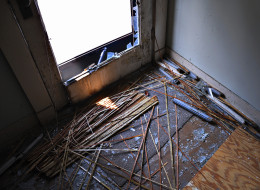
proceeded to a small house on the property. There, according to a police
report, he broke the lock off one of the doors and forced his way
inside.
The man, who police would later identify as David Cole, was allegedly
there on official business: He worked in a little-known but booming
industry that maintains and inspects millions of foreclosed and
abandoned homes owned by mortgage lenders in the wake of an epochal real
estate bust. The bank responsible for this particular home had
presumably decided that the home was another discarded mess, and Cole's
company had been dispatched to shore the building against the ravages of
weather and decay.
The owner of the property, a recently widowed woman named Marie
Osborne, acknowledges that she was indeed in foreclosure. She was away
when Cole arrived, she said. Still, the house was very much hers and far
from abandoned, as even a cursory review would have made clear,
according to a lawsuit she subsequently filed.
When she returned home, Osborne was "astonished" to discover that her
doors had been padlocked and her belongings ransacked, she claims. A
grandfather clock was missing, along with an antique gold mirror,
several televisions and family photos, Osborne alleges.
Osborne filed the lawsuit against those she asserts are responsible
-- Safeguard Properties, a Valley View, Ohio-based firm that has quietly
become a giant in the business of tending to abandoned properties, and
Daryl Cole, proprietor of Cole & Sons, a local business that was
supposedly acting as a subcontractor.
Neither Daryl Cole nor his son David returned requests for comment.
Safeguard declined to comment, citing pending litigation. In response to
a general question about the merits of dozens of lawsuits against the
company -- and scores of similar complaints lodged against others in the
same line of work -- a spokeswoman noted that Safeguard completed more
than 14 million work orders last year.
“That isn’t to minimize the lawsuits, because our goal would be
zero,” the spokeswoman said. Even so, she added, instances like these
are “extremely rare.”
But
accounts such as Osborne’s have become familiar as the "field services"
industry sifts through the wreckage of a monumental wave of reckoning
that has seen some 10 million homes slide into foreclosure since 2006.
An investigation by The Huffington Post featuring interviews with more
than two dozen independent bank contractors and a review of more than
100 lawsuits reveals that the industry, which experts estimate booked
more than $2 billion in revenue last year, is plagued by allegations of
misconduct and abuse.
According lawsuits and police reports drawn from communities nationwide,
contractors
have emptied lived-in homes of all possessions, including jewelry,
heirlooms, and -- in at least one instance -- the family cat. They
have allegedly dumped trash illegally rather than paying for disposal,
and have been accused of painting over potentially hazardous mold
instead of removing it. They have allegedly forged paperwork, and used
doctored photographs to bill banks and the federal government for
services never performed.
“I’ve walked into houses that someone else was supposed to take care
of that were in horrible shape,” said Mimi Norris, who owns JR Services,
a small company in Ohio that hires contractors to inspect and repair
homes. “I have gone to inspect properties reported as vacant that were
still occupied. This happens too often.”
The troubles emanating from the home inspection and repair business
are the product of unique forces that generated the business at hand.
The same banks that contributed to the real estate bubble via overly
aggressive, lightly supervised mortgage lending now confront a glut of
overgrown, vacant, and damaged homes.
Some of these homes are foreclosed and owned by mortgage companies;
others are abandoned but still in legal possession of the former owners.
The banks also dispatch contractors to the homes of people who have
fallen 45 days or more behind on their payments but are not in
foreclosure to determine if they have been abandoned. All told, an
estimated 3.3 million properties require either an inspection or some
form of repair work each month.
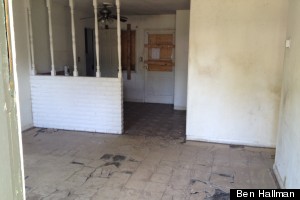 A foreclosed home in Cincinnati. Contractors inspect or repair an estimated 3.3 million homes like this one each month.
Many of the contractors willing to engage in the dirty work of
cleaning and repairing these homes have landed there by way of
joblessness -- among them laid-off loan officers and other mortgage
industry refugees striving to make an honest living in a bad economy.
Others are felons or cheats drawn to a sector that boomed after the
housing bubble popped, seeking opportunity in an industry with a history
of underpaying its workers and neglecting background checks. Fierce
competition among the businesses that hire these contractors and weak
supervision by banks and federal agencies have prompted some workers to
take shortcuts and to do work they are not licensed to do.
Adam Reynolds, a Naples, Fla., contractor who ran a field services
company called REO Proz until it folded last year, said he was routinely
dispatched by banks or larger field services companies to drill out
locks to see whether properties were vacant, only to find that tenants
still lived there and had never missed a payment.
“Countless times," he said, he received orders to clean out
properties that had personal photos on the shelves and fresh food in the
refrigerator.
"I've even had an order sending me to a property that was never owned
by any bank," he said. "I know it has got to be painstaking at the top
to keep tabs on everyone, but these errors are life-changing for some
people.”
For the contractors, the work is by turns grim and dangerous.
Entering other people's property armed with nothing more than
flashlights, they sometimes encounter squatters and criminals who use
boarded-up properties as drug dens, sometimes provoking violent
confrontations.
“I’ve been chased by dogs, I’ve been spat at, I’ve had things thrown
at me,” said Mary Sisson a mother of three who inspects abandoned homes
in the suburbs of New York City. “I’ve walked in on gang members.”
The full costs of the industry’s shortcomings are borne by more than
immediate victims: The consequences ripple out to surrounding
communities. Shoddy repair work allows homes to disintegrate into
eyesores and neighborhood hazards, attracting vagrants, junkies and
thieves who tear out installations such as copper wiring. Pipes burst,
filling basements with water, while broken windows allow rain to
penetrate, spawning the growth of dangerous mold. Lawns grow into
burgeoning forests, giving cover to destructive rodents and pests.
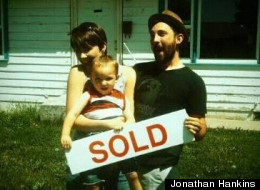
In Klamath Falls, Ore., Jonathan Hankins, his wife and young son said
they were forced to abandon the home they bought from Freddie Mac last
year after they started suffering from nosebleeds, respiratory problems
and mouth sores. A home testing kit revealed that parts of the house
were contaminated with 76 times the allowable maximum level of
methamphetamine residue, Hankins said. A local realtor hired to clean
out the property never reported that the home was used as a drug lab,
Hankins said.
Last year, Secret Service agents working with the Federal Housing Finance Agency
raided American Mortgage Field Services
in Brooksville, Fla., north of Tampa. The owner recently pleaded guilty
to creating fraudulent inspection reports for work that was never done
over a three-year period, overbilling Bank of America, which hired the
company to inspect Fannie Mae and Freddie Mac properties, by $12.7
million.
In addition to Fannie, Freddie and other mortgage companies, many
abandoned and foreclosed homes are owned directly by the federal
government, including the U.S. Department of Housing and Urban
Development, which also hires contractors to watch over the homes. An
audit last September by HUD's Office of Inspector General found that 60
percent of sampled homes were not properly maintained. The auditor who
checked up on one home, near Santa Ana, Calif., commented in field notes
that the property was "filthy" with "broken windows, roaches and hair
in [the] sink" even though it was supposedly inspected just two days
before by a contractor hired by HUD.
The most common problem appears to be inspectors breaking into
still-occupied homes. Contractors are regularly dispatched to secure
houses against damage from cold weather or to perform so-called "trash
outs" in which they empty homes of belongings. Several contractors told
The Huffington Post that they have frequently been sent on such jobs
only to find on arrival that the legal owner still lives in the house.
Most leave after they force their way inside and find family photos and
other evidence that indicate a house is still occupied by its owner.
Some do not.
PIRATE MENTALITY
In Whippany, N.J., Lynn Stringas claims that contractors working for
CoreLogic Field Services, a Westlake, Texas-based company working for
Wells Fargo, forced their way into her home three separate times. Like
many others who have had run-ins with bank contractors, her home was in
the foreclosure process, but she was still the legal owner.
The last break-in came after Stringas and her attorney called the
bank repeatedly, pleading that they stop, she said. On that final
occasion, Stringas claims, the contractors kicked in the front door and
dumped boxes of papers she had left in her kitchen throughout her house.
“I felt like I was going to have a nervous breakdown,” Stringas said.
In Punta Gorda, Fla., a Canadian couple vacationing in a rental home
returned from a day at the beach to discover that their laptop computer,
iPod and six bottles of wine were missing, according to a lawsuit by
the owner filed in Florida circuit court.
A contractor, Victor Titenko, was sent by a field services company
called Core Logic after someone wrongly determined the house was
abandoned. According to a police report, Titenko denied taking the
belongings, and also denied opening the refrigerator and removing a
beer, though a can of beer bearing his fingerprints was found open on a
counter.
Titenko could not be located for comment. Public records reveal that
he has been arrested at least six times in Florida for burglary and
robbery, along with larceny, narcotics possession and attempting to sell
stolen goods. CoreLogic declined to comment.
“The banking industry has a pirate mentality,” said Matthew Weidner,
an attorney in Sarasota, Fla., who has represented scores of homeowners
in lawsuits against field services companies. “They take the position
that if you have a mortgage, they can break down your door whenever they
want.”
As Marie Osborne tells it, the presence of the valuables left in her
Arkansas farmhouse should have been enough to establish clearly that her
home was not abandoned. She claims in her lawsuit that anyone could
have quickly surmised that her home was still occupied, given how family
and workers were coming and going on a daily basis. A check of the
electric and gas meters would have shown that utilities were turned on,
she said.
The farm in Arkansas, as shown on Google Maps.
Osborne's account was confirmed by Lt. Jeff Allison, a Little Rock
police detective who investigated the case. Allison estimated the value
of the missing items at "several hundred thousand dollars," noting that
some had belonged to movie stars and presidents. There was "no reason to
think" the home was abandoned, Allison said. "You could have walked in
and lived there that day."
Osborne's late-husband, William Jennings Osborne, made a fortune in
the medical research industry. He was known both for his philanthropy
and for his lavish Christmas light display, which attracted national
attention and traffic jams so awful that neighbors eventually sued to
halt the festivities. When he died in 2011, he left behind large debts,
including an unpaid mortgage on the house, one of several that he owned.
The homes would later sell at auction. But at the time of Cole’s visit,
Marie Osborne was the legal owner of the horse farm.
Cole was arrested and is set to stand trial in the next few months on
a burglary charge. According to police, he worked for a company owned
by his father, Daryl Cole. According to public records, Daryl Cole is a
convicted sex offender who pled guilty in 2008 to using the Web to
solicit an officer who was posing as a 14-year-old girl.
Allison said that the elder Cole told police that his son told him he
had burned the televisions. None of the items from the house were
recovered.
Whether Cole & Sons worked directly for Safeguard or indirectly
through another contractor cannot be determined from public records. But
the very fact that the company was dispatched to attend to Osborne's
property highlights what critics portray as a major problem with the
industry: scant background checks to ensure that people without criminal
backgrounds are sent into other people’s homes.
A Safeguard spokeswoman said the company requires background checks
for the "business principals" of direct vendors it hires, and expects
them to do the same with employees and subcontractors they might use.
Plaintiffs' lawyers allege that companies like Safeguard, and the
banks and federal agencies that hire them, are failing in their
obligation to oversee the low-paid, little-trained and itinerant workers
who often actually do the jobs. Several bank agents told the HuffPost
that while many contractors appear to be scrupulous and careful, sloppy
mistakes and dangerous shortcuts amount to routine events.
"Out here in the field there is no oversight," said Brent Johnson, an
Iowa-based contractor who has worked in the industry for 15 years.
"This is the Wild West. The American public is buying homes at a reduced
cost and thinking they are getting a good deal, but they are buying
nightmares."
NOT WORTH THE DANGER
Two decades ago, banks themselves generally took care of foreclosed
and abandoned properties. But as the mortgage industry grew, lenders
began parceling out the work to a handful of large field services
companies, which established networks of subcontractors in states across
the country.
The housing crash and subsequent increase in foreclosures
dramatically enhanced demand for such services. At the end of 2007,
Fannie Mae and Freddie Mac, the two government-controlled mortgage
companies that together own or guarantee roughly half of all mortgages
in the United States, held 48,000 foreclosed homes on their own ledgers.
By the end of 2010, that number had grown almost fivefold to 235,000.
As of January, 1.5 million homes were in the foreclosure process or
were owned by banks or a federal agency, according to RealtyTrac, an
online real estate data company. In addition, 1.8 million homeowners
were delinquent by at least 60 days on their mortgages, according to the
Mortgage Bankers Association. These numbers have remained high even as
the housing market has more broadly shown recent signs of recovery.
The swelling numbers of foreclosed and abandoned homes -- along with
those that are still occupied but in default, requiring a monthly
inspection to verify occupancy -- created a rare job opportunity for
mortgage industry castaways. In the years since the crash, more than
10,000 have filled the ranks of the field contracting services industry,
knocking on doors, taking photos of front lawns and repairing broken
windows and toilets -- often at the same homes they built or helped
finance only a few years earlier.
“All of a sudden we saw an enormous influx of people wanting to get
in on the money and not really knowing what they were doing," said
Norris, who owns the Ohio property inspection company.
Many of these contractors started small businesses with the aim of
capturing some share of the work flowing from the largest field services
companies, a group that includes Safeguard, Corelogic, Lender
Processing Services in Jacksonville, Fla., and Cyprexx Services in
Bradenton, Fla. These small companies, in turn, often hire contractors
of their own, which sometimes farm the work out yet again.
With each layer of subcontracting, though, oversight tends to
diminish along with compensation, generating pressure and opportunity to
cut corners, contractors said.
“There can be two or three companies between you and the bank taking
chunks of this money out for doing nothing but shuffling paperwork,”
said Wayne Frazier, a general contractor in Maryland.
The trickle-down effect often means that banks and taxpayers aren’t
getting much for each dollar spent. The federal Department of Housing
and Urban Development pays a maximum of $30 for an initial home
inspection and $20 for each subsequent inspection, according to agency
pricing sheets.
Angie Montgomery in Cincinnati said she earns $3 per inspection -- $4
if the job requires that she go inside a house. Out of that, she must
pay for gas and car maintenance, along with liability insurance
premiums. She must also contend, she said, with angry homeowners who see
her as an agent of the same bank that they are fighting with to avoid
foreclosure. She has been yelled at, bitten by dogs and once entered a
home where the vindictive former owner had cut a hole in the floor, then
covered it with a carpet, she said.
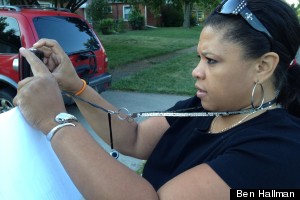 Angie Montgomery, a property inspector in Cincinnati, snaps a photo of a vacant home.
A Craigslist search for "property inspector" turned up dozens of ads
looking for people to inspect homes for as little as $1 or $2 per job.
For so little money, inspectors often don't bother to get out of their
cars, let alone knock on doors, talk to neighbors or check to see if
utilities are turned on, experienced contractors said.
The same market forces that have brought down pay for home
inspections have bled into the other types of cleaning and repair work
contractors commonly do.
Buczek Enterprises, a company in Derby, N.Y., advertises that it will
pay $30 to mow grass up to a foot high, and on a lawn up to 10,000
square feet, or a little bit bigger than a baseball diamond. Rates that
low may not even cover travel time and fuel costs, experienced
contractors said.
Many contractors facing this pay squeeze said they have simply
stopped accepting such jobs, concluding that the meager pay is not worth
the risk or hassle.
“I’m an Iraq and Afghanistan veteran,” said Sean Dougherty, a
contractor in Pennsylvania. “And it is more hostile here working for
these companies.”
UNSCRUPULOUS MONEY
With both oversight and pay at a minimum, the conditions are ripe for
those willing to cut corners and commit fraud, industry veterans said.
The most prevalent form of misconduct is the practice of simply
charging for work done poorly, or not done at all, a HuffPost review
found. Though field services contractors are required to submit
photographs documenting their work, follow-up inspections indicate this
form of verification is not always sufficient, or is sometimes
falsified.
An audit by HUD's Inspector General last September found that one Las Vegas field services company, Innotion Enterprises,
had failed to maintain "at a high standard of care" more than one-third of the properties audited.
At one home, HUD auditors discovered weeds that were four feet high
-- even though a photo submitted 13 days before showed a contractor
pulling weeds. During another review, an HUD auditor found that a
contractor who claimed to have installed safety rails on a front porch
had not bothered to attach them with screws or nails to hold them in
place. The cost to HUD for this botched work: approximately $360 per
home, per month.
A phone number for Innotion was disconnected.
Another HUD Inspector General audit -- the one that determined that
60 percent of sampled homes were not properly maintained -- also found
that HUD continued to dole out contracts to companies
after the agency had identified performance issues with those same companies.
The report concluded that the agency “
did not have adequate procedures in place to ensure consistent and adequate enforcement” of contracts.
“Every concern raised by the Office of the Inspector in the [audit]
has been addressed," said Jerry Brown, a HUD spokesman in a statement.
"We have started working on the fixes and we anticipate they will be
completed by Sept. 30, 2013. The OIG has been briefed on our plan and is
fully aware of our commitment to right the wrongs."
Though HUD oversees a relatively small number of abandoned and vacant
homes -- about 40,000 at any given time -- experienced contractors said
the same issues are at play throughout the industry. Bruce Davenport, a
Georgia contractor who fixes up vacant homes, estimated that 70 percent
of the properties he visits show signs of jobs half-done, or not done
at all.
Sometimes the evidence of misconduct is apparent to anyone who happens by a foreclosed home.
In Lehigh Acres, a Florida exurb among the hardest hit by the foreclosure crisis,
police arrested Don Zilen in 2011
after he admitted to illegally dumping more than 10,000 pounds of trash
that he pulled out of two homes into the backyard of a vacant house
near where he lived.
According to a pay record for the job -- which Zilen also unwisely
dumped -- Fannie Mae had hired Cyprexx Services to clean out the houses.
Cyprexx hired a local company, REO Proz, which hired Zilen.
Adam Reynolds, the former owner of REO Proz, told HuffPost that
licensed dumpsites charge to accept waste, so Zilen likely calculated
that he could save a few hundred dollars by emptying the trash in
someone's backyard. Reynolds said that Zilen had passed a background
check, but acknowledged that he did not perform such checks on all
subcontractors. "Sometimes we hired them on a whim," he said.
'REASONABLE EFFORTS'
The failure by the industry to consistently vet contractors echoes
practices that led to past investigations and rule-changes. In 2005, for
example,
a South Florida Sun-Sentinel investigation
found that government inspectors entrusted to verify damage claims for
the Federal Emergency Management Agency included criminals with records
for embezzlement, drug dealing and robbery. FEMA subsequently tightened
its screening requirements.
HUD did not respond to requests for comment about what steps the
agency takes to vet its contractors. Broadly, regulations that govern
federal contracts require "reasonable efforts" to not include an
individual as a "principal" whom "due diligence would have exposed as
having engaged in conduct that is in conflict with the contractor’s code
of business ethics and conduct."
In the case of one Atlanta field services company, a simple
background check may have prevented what some contractors allege was a
short-lived, but costly scam.
Brandon Lambert and his business partner, Jason Mathis, opened
Premier Property Management Services last August using $70,000 in seed
money from a local businessman, Mike Edwards, as starting capital.
Registration papers indicate that Lambert was chief financial officer
for the company. He is also a convicted felon, having served two stints
in prison for check fraud and forging documents, according to public
records.
Over a three-month span, Lambert and Mathis hired contractors to
clean and preserve hundreds of properties. In October, the company
abruptly shut its doors.
Seven former contractors who maintained homes for the company allege
that Lambert and Mathis owe tens of thousands of dollars for work that
was done, but not paid for. Two of the contractors have filed claims in
Atlanta courts. Edwards said that he hasn't recovered any of his
investment money.
Premier Property was a middleman, or an "order mill" as some
contractors call these companies. At least least half a dozen larger
field services companies hired it to clean out and preserve properties
for entities including HUD, according to contractors who spoke to
HuffPost.
It's not clear what steps, if any, these companies take to vet the contractors they hire to carry out work orders.
Asset Management Services, or AMS, in Bristol, Pa., is one of the
companies that hired Premier Property to maintain foreclosed homes,
several contractors said. On its website, AMS boasts that its “highly
skilled and trained property technicians manage thousands of assets
across the nation.”
AMS did not respond to a request for comment. Beth Meade, a former
AMS employee hired in the fall of 2011, said almost all of her
colleagues were temporary workers earning minimum wage and that they
received little training. She said she was assigned with one other
worker to oversee a portfolio of 125 properties in northern Florida
owned by the Federal Deposit Insurance Corp., which had taken title to
them after a bank failure.
Meade said she hired contractors to inspect and preserve homes by
searching “general contractors” and “Florida” using Google. She said she
didn’t know if the contractors she hired had criminal pasts or whether
they were licensed to do repair work -- or even whether there is a
licensing requirement in Florida.
In an interview, Edwards said that he should have known better than
to loan Lambert and Mathis money without better vetting their
backgrounds. He said that he cut off the funding after it seemed clear
that Lambert was "making up numbers." He said he did not expect to be
repaid and that he is not pursuing legal action, having concluded it
would be fruitless.
Opinions differ on what happened: Edwards said he thinks Mathis and
Lambert were simply bad businessmen; former contractors told HuffPost
they believe the pair intentionally cheated them.
After Premier Property collapsed -- or was looted -- Mathis and Lambert appear to have stayed in the Atlanta area.
In December, a Georgia company called American Contracting
Consultants Inc. listed Mathis as its "registered agent" in public
filings. Antwane Adams, also listed as a registered agent of the
company, told HuffPost that he is a childhood friend of Mathis. Adams
said the business came about after Mathis approached with an
opportunity: If he and his wife would pitch in just a few thousand
dollars, Mathis and Lambert would help them launch a new business in the
property preservation industry. Adams said he did not know anything
about the industry prior to the proposal.
In January, Adams said, he began hearing from contractors who claimed
the two men owed them money. When confronted with the allegations,
Mathis and Lambert "up and disappeared," Adams said, taking with them
tools and other equipment.
Adams said he was working to remove Mathis's name from registration
documents. "We've been getting a lot of grief about this," he said.