Showing posts with label uneducated Judges. Show all posts

Wednesday, July 17, 2013

What happens when a lender can’t produce the original note?

Unfornately, Judges are allowing this. They look at the paperwork adn say is this your signature and its over, they don't care if its the legal papers or not, or that they are all in order, especially here in VT.Like he said, we can proffer the note. Its not his problem anymore, after that. Thing is its now time to start charging Judges that do this. Its a crime.


A growing number of homeowners around the country are using a foreclosure defense that may help them retain their homes. It’s called “Produce the Note” (as also being jointly advocated by Terry Smiljanich and The Consumer Warning Network) and we want you to know this is not a mere technicality that should be treated lightly by mortgage lenders or by the Courts.

Everyone needs to understand the importance of this issue. When a lender can’t produce the original note, allowing a foreclosure to proceed puts the homeowner at risk of owing that debt again to another party in the future. Therefore, great caution must be taken before a judge can allow someone who can’t produce the original note to cash in on your home.

What if Your Lender CAN’T Produce the Note?

So, what happens when the lender tells the Court it can’t produce the original note, because it is lost? Let’s start with the basics. If a lender wants to foreclose on a property, it has to be able to show that it is, in fact, the appropriate person to whom the money is owed. That right to foreclose belongs ONLY to the person who has legitimate POSSESSION OF THE ORIGINAL NOTE - not a copy, not an electronic entry, but the original note itself with the original signature of the person(s) who allegedly owes the money along with appropriate raised notary seal and signature. So, if you are faced with a foreclosure, you have every right to demand that the person or entity trying to take your property, first prove to the Court that they have the legal right do to so in the first place by proving they have legal possession of the original promissory note.

In my opinion, an original mortgage note is much like legal tender and should be guarded and protected as such by the person holding such an asset. Loosing an original mortgage note is like loosing a $100 bill or a gift card or a lottery ticket. What if I scratched that million dollar ticket and just stuck it somewhere and misplaced it? Do you think I could just show up at lottery headquarters and claim my prize without having the winning ticket? The same principle applies to the person or entity claiming to be the legal holder of an original mortgage note. He who holds the note holds the key.

What the Lender Must Do

What often happens, however, is that the lender claims it doesn’t have the original note, because that note has been lost or destroyed. If the lender is making such a claim, the law requires the lender to prove all of the following under the “Uniform Commercial Code”, which is a set of laws governing commercial transactions that many states have adopted. It contains a specific provision on this subject (Section 3-309) which states that a person can enforce a promissory note without having the original, BUT only under certain limited circumstances.

1. The person or entity has to swear and attest that it no longer has the original note;
2. The person or entity has to prove that it was properly in possession of the note and was entitled to enforce it WHEN it lost possession of the note;
3. The person or entity has to prove it didn’t “lose” possession simply because it transferred the note to someone else (i.e., it’s not really lost); and
4. The person or entity has to prove that it cannot produce the original note because the instrument was destroyed or its whereabouts cannot be determined or it was stolen by someone who had no right to it.

All of these matters have to be definitively proven by the person or entity trying to foreclose on the property. It is not the obligation of the borrower to prove or disprove any of this. The borrower can challenge the right of the person or entity trying to foreclose and demand proof.

The Court’s Important Role

It is up to the Court to determine whether the lender has satisfactorily proven why it no longer can produce the original note. The Court also has to be satisfied that when the original note was lost, the person trying to foreclose on the property had possession of the note at the time it was lost. Until the Court has been satisfied of all of this, the foreclosure cannot proceed.

It is also important for the Court itself to understand that this issue is not merely a “technicality” and the judge should not be satisfied with anything less than full proof of this issue. The Court itself needs to appreciate the fact that if it should agree that an original note has been legitimately lost (and allows the foreclosure to proceed) it is the borrower who is still at risk.

Why? Because incredibly, even if a Court has found that the original note is lost and the foreclosure sale is finalized, if someone later turns up with the original note and proves that it is the proper holder of the note, and not the person who foreclosed on the property, the original borrower is STILL LIABLE.
That’s right. Someone took your home and the Court allowed it because it believed that the lender proved that the note was lost and it was the proper party. Then someone legitimate shows up in the future with the actual note and you still owe that person the money even though your property was taken with the blessing of the Court. Trust me, this is a very serious issue regarding post foreclosures and post pre-foreclosure short-sales. It has happened to three of our own clients! These homeowners had the need to sell their property by means of a negotiated short-sale (so they could avoid a foreclosure) only to find out that the entity claiming to have the legal right and authority to enter into such negotiations and accept such settlements sold their note to another entity and weren’t even aware of it. Several months later, the newly assigned lenders (now claiming to be the rightful owners of our client’s original notes) have since come forward and have also filed suite seeking to recover their entire outstanding principle balances owed to them (prior to the homeowners closing their short-sale transactions with the wrong note holders).
How fair is that?!?! It’s not! And that’s why homeowners need to start fighting back when someone is trying to take their home by foreclosure, especially since an overwhelming percentage of mortgages granted over the last 3 to 5 years have been packaged into securities and re-sold and re-assigned numerous times since the inception of the borrower's original note and mortgage. In some states, homeowners have better than a 50/50 chance of being successful in defending themselves against a completed foreclosure. Why wouldn’t anyone who owns a home do everything in their power to protect and defend it?

All the Best,

Rick D. Misitano, Senior Paralegal
Law Offices of James M. Bosco & Associates
Methuen Executive Park
240 Pleasant Street
Methuen, Massachusetts 01844
Phone: (978) 687-8804
Fax: (978) 687-8872
boscolaw@comcast.net

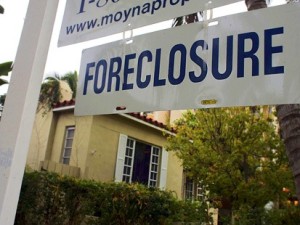
Friday, July 12, 2013

VT is in sad shape

WHAT A BUNCH OF BULLSHIT! 

Vermont foreclosure documentation problems surface; joins nationwide probe


Improper foreclosure documentation problems have surfaced in the state, resulting in one Vermont judge to order a hearing to determine the validity of the information.

Concerns about the prospect of improper affidavits filed in the state’s civil courts prompted the Vermont Attorney General’s office on Wednesday to join with the 49 other states and the District of Columbia to launch an investigation into widespread problems with foreclosure documentation.

In Burlington civil court, Judge Helen Toor this week ordered a hearing in the foreclosure case of GMAC Mortgage LLC vs. Cynthia K. Jones.

GMAC voluntarily filed an amended affidavit with the court of amounts owed by the borrower. But in her order Toor cited the amended affidavit, which acknowledged that the original document may not have been signed “on the personal knowledge of the affiant (Jeffrey Stephan) and may not have been executed in the physical presence of a notary public.”

The resubmitted affidavit drew the skepticism of Toor, who wrote that “the court is at a loss to understand how it can rely upon an affidavit from a party that has apparently filed a false affidavit with the court.”

Toor ordered a hearing for Nov. 30.

A similar case involves GMAC Mortgage vs. Julia E. McCarty. Toor delayed a hearing in that case while the foreclosure is in mediation.

GMAC is represented by South Burlington lawyer Joshua Lobe, who did not immediately return a phone call seeking comment. Toor in her order found no inappropriate conduct by Lobe.

Carmen Cote, Burlington civil court operations manager, said Wednesday there are approximately a half-dozen similar cases before the court.

Although unaware of the GMAC cases, the assistant attorney general, Elliot Burg said the improper signing of documents is the type of problem that is likely to be repeated.

“If the foreclosure affidavits have been signed by people without knowledge at the national level, we expect there would be a similar problem here,” Burg said.

Although Vermont has a low foreclosure rate, Burg said the documentation problems here could still be significant.

“The banks that have been identified as having issued affidavits that were robo-signed are banks that have been involved in foreclosures here in Vermont,” he said.

Robo-signing is the practice of signing documents without confirming they are accurate.

The problems with fraudulent foreclosure documentation by some of the nation’s mortgage giants have sent shock waves through the real estate markets in several states, including Florida, where a large number of foreclosed homes have been sold.

GMAC Mortgage has placed a freeze on evicting homeowners and selling foreclosed homes in 23 states, including Vermont, that require court approval. JPMorgan Chase has also taken steps to halt questionable foreclosures.

Faulty documentation could pose problems for someone who purchased a foreclosed home if the previous owner challenges the legality of the foreclosure and subsequent sale.

At the state Department of Banking, Insurance, Securities and Health Care Administration, Thomas Candon, the deputy banking commissioner, said only a few cases have been reported in Vermont and no complaints have been filed with his department. But Candon also said since the national problem is in its early stages, additional cases could come to light here.

Candon said several of the larger players tied to the foreclosure documentation problem conduct business in Vermont, including GMAC Mortgage, Bank of America and JPMorgan Chase.

Chris D’Elia of the Vermont Bankers Association said any problems would likely be confined to the national mortgage companies and not Vermont’s community banks.

“If a Vermont bank is holding a mortgage that’s moving toward foreclosure, you can be sure they have been working with that homeowner for a while,” D’Elia said.

Vermont continues to have one of the lowest foreclosure rates in the country. The Mortgage Bankers Association second-quarter report ranked Vermont 46th in mortgage delinquencies and 48th in new foreclosures.

According to the state Banking Division, 1,353 homeowners were in foreclosure through September — a 6.2 percent decline from the nine-month period a year ago.

Rutland County has the highest number of foreclosures in the state with 198 filed through September. Terry Corsones, Rutland civil court clerk, said she is not aware of similar problems with foreclosures filed in her court.

Bob Hill of the Vermont Association of Realtors said he hasn’t heard of any problems with foreclosed properties in the state.

Hill said because most mortgages are with local banks, “that’s a lot of why we we’re protected.”


Why Foreclosures in Vermont Are Up

Local Matters


Even as the national foreclosure crisis appears to be easing, Vermont is experiencing a spike in legal filings by mortgage lenders seeking to take title to homes whose owners have fallen behind in their payments.
Vermont’s foreclosure rate has ranked as one of the lowest in the country in the years since the 2008 financial meltdown put millions of Americans in jeopardy of losing their homes. Today, the state is an outlier once again — for the opposite reason. Nationally, foreclosure filings fell by 28 percent last year; in Vermont, they increased 33 percent.
The number of foreclosure cases had fallen in Vermont in two consecutive years since peaking at 1924 in 2009. There were 1370 filings in 2011, but the total suddenly soared to 1824 in 2012.
What accounts for the sharp increase?
Vermonters familiar with the foreclosure process suggest it’s a product of a delay in filings by mortgage lenders who held off as lawsuits against some of their practices moved through the court system.
“The decline we saw was basically a false decline,” says Eric Avildsen, director of Vermont Legal Aid. “National banks engaged in settlement negotiations relating to their bad practices weren’t doing large numbers of new filings.”
Thomas Candon, the state’s deputy commissioner of banking, offers a similar explanation. “Filings that could have been done earlier are happening now, but I think it will start to wane as we go through this year,” he says.
Vermont’s current counter-cyclical trend could reflect a surge in new filings by the Big Five national mortgage lenders: Bank of America, Citigroup, GMAC/Ally, JPMorgan Chase and Wells Fargo. They may have moved earlier and more concertedly in states with much larger numbers of loan defaulters. It might thus be that the Big Five are playing catch-up in Vermont.
But officials aren’t sure. The Vermont Department of Financial Regulation doesn’t compile statistics on which entities are initiating foreclosures, Candon says.
He does observe, however, that Vermont lending institutions are much less likely to launch foreclosure actions than are the Big Five. “Vermont banks and credit unions are hand-holding, trying to help people who fall behind,” he says.
Avildsen also cites “a tremendous difference between Vermont bank mortgages and national bank mortgages.” In comparison to the loosey-goosey terms offered in the previous decade by subprime lenders, Vermont-based creditors “often required more of borrowers and had personal relationships with borrowers,” Avildsen notes. “At Legal Aid, we rarely get involved with cases involving Vermont banks.”
Some foreclosure cases in Vermont are “just heart-wrenching,” Candon says. Medical bills, job losses and marital issues are the leading causes of loan delinquencies leading to foreclosure proceedings, he says.
Take the case of one client of Jessica Radbord’s. The Vermont Legal Aid attorney tells of a Chittenden County homeowner who developed cancer and had to undergo surgery and chemotherapy, resulting in whopping bills and the loss of her job. The woman was threatened with foreclosure until Legal Aid helped her enter a federally sponsored mediation process that can reduce mortgage interest rates and stretch out payment periods. The woman was able to keep her home as a result, Radbord reports.
An unknown number of Vermonters have not been as fortunate. Candon says the state does not know how many of the 10,772 foreclosure filings since 2005 actually forced Vermonters into homelessness.


 This is all so far from the truth. If you call the AG and report fraud, they will pawn you off to someone else.. and the someone else pawns you off to another, and do NOT go to the Governor or Senators or congressmen,. if they even answer they play the pawn game as well. 


Judges in this state are uneducated in the area alot of these foreclosures fall under, SECURITIES, REITS, ROBO SIGNING ( according to one judge , that is not happening in VT..HUH??????) 

Now , its not the big banks coming in, its private hedge funds, getting forged paperwork and the courts saying, oh, OK, this looks legal ( its not) take the home. These Judges know nothing about how this paperwork is processed, or that they need an analog attached to the mortgage and note to show the history of who had it and how it was passed on.. also assignments, not to mention land records not being recorded , but that's OK according to one Judge we can fix it. 

VERMONT WAKE UP! THEIR ARE 70 FORECLOSURES ALONE IN THE TOWN I LIVE IN OF 2200 PEOPLE! 3 I KNOW OF WERE COUNTRYWIDE , AND MERS ATTACHED AND STRIPPED OF ITS COPPER AND FURNACES..NOT HAPPENING IN VERMONT? WERE UP TO OUR NECKS IN FORECLOSURES! 

AS FOR THE IBANEZ RULING - DENYING THIS IN VT COURTS IS A TRAVESTY OF JUSTICE! THIS WAS ALSO UPHELD IN THE SUPERIOR COURT.. YOU VT JUDGES ARE ALLOWING OUR HOMES TO BE STOLEN, AND YOU DON'T CARE!

Breaking News: U.S. Bank v. Ibanez Foreclosure Ruling Upheld: An Indictment Of The Securitized Mortgage System


“[W]hat is surprising about these cases is … the utter carelessness with which the plaintiff banks documented the titles to their assets.” –Justice Robert Cordy, Massachusetts Supreme Judicial Court
Foreclosure2-300x225.jpgToday, the Massachusetts Supreme Judicial Court (SJC) ruled against foreclosing lenders and those who purchased foreclosed properties in Massachusetts in the controversial U.S. Bank v. Ibanez case. Here is the link for the decision. I’ve posted the decision below, and I’ve done a video blog embedded below.
Background
For those new to the case, the problem the Court dealt with in this case is the validity of foreclosures when the mortgages are part of securitized mortgage lending pools. When mortgages were bundled and packaged to Wall Street investors, the ownership of mortgage loans were divided and freely transferred numerous times on the lenders’ books. But the mortgage loan documentation actually on file at the Registry of Deeds often lagged far behind.
In the Ibanez case, the mortgage assignment, which was executed in blank, was not recorded until over a year after the foreclosure process had started. This was a fairly common practice in Massachusetts, and I suspect across the U.S. Mr. Ibanez, the distressed homeowner, challenged the validity of the foreclosure, arguing that U.S. Bank had no standing to foreclose because it lacked any evidence of ownership of the mortgage and the loan at the time it started the foreclosure.
Mr. Ibanez won his case in the lower court in 2009, and due to the importance of the issue, the Massachusetts Supreme Judicial Court took the case on direct appeal.
The SJC Ruling: Lenders Must Prove Ownership When They Foreclose
The SJC’s ruling can be summed up by Justice Cordy’s concurring opinion:
“The type of sophisticated transactions leading up to the accumulation of the notes and mortgages in question in these cases and their securitization, and, ultimately the sale of mortgaged-backed securities, are not barred nor even burdened by the requirements of Massachusetts law. The plaintiff banks, who brought these cases to clear the titles that they acquired at their own foreclosure sales, have simply failed to prove that the underlying assignments of the mortgages that they allege (and would have) entitled them to foreclose ever existed in any legally cognizable form before they exercised the power of sale that accompanies those assignments. The court’s opinion clearly states that such assignments do not need to be in recordable form or recorded before the foreclosure, but they do have to have been effectuated.”
The Court’s ruling appears rather elementary: you need to own the mortgage before you can foreclose. But it’s become much more complicated with the proliferation of mortgage backed securities (MBS’s) –which constitute 60% or more of the entire U.S. mortgage market. The Court has held unequivocally that the common industry practice of assigning a mortgage “in blank” — meaning without specifying to whom the mortgage would be assigned until after the fact — does not constitute a proper assignment, at least in Massachusetts.
My Analysis
  • Winners: Distressed homeowners facing foreclosure
  • Losers: Foreclosing lenders, people who purchased foreclosed homes with this type of title defect, foreclosure attorneys, and title insurance companies.
  • Despite pleas from innocent buyers of foreclosed properties and my own predictions, the decision was applied retroactively, so this will hurt Massachusetts homeowners who bought defective foreclosure properties.
  • If you own a foreclosed home with an “Ibanez” title issue, I’m afraid to say that you do not own your home anymore. The previous owner who was foreclosed upon owns it again. This is a mess.
  • The opinion is a scathing indictment of the securitized mortgage lending system and its non-compliance with Massachusetts foreclosure law. Justice Cordy, a former big firm corporate lawyer, chastised lenders and their Wall Street lawyers for “the utter carelessness with which the plaintiff banks documented the titles to their assets.”
  • If you purchased a foreclosure property with an “Ibanez” title defect, and you do not have title insurance, you are in trouble. You may not be able to sell or refinance your home for quite a long time, if ever. Recourse would be against the foreclosing banks, the foreclosing attorneys. Or you could attempt to get a deed from the previous owner. Re-doing the original foreclosure is also an option but with complications.
  • If you purchased a foreclosure property and you have an owner’s title insurance policy, contact the title company right away.
  • The decision carved out some room so that mortgages with compliant securitization documents may be able to survive the ruling. This will shake out in the months to come. A major problem with this case was that the lenders weren’t able to produce the schedules of the securitization documents showing that the two mortgages in question were part of the securitization pool. Why, I have no idea.
  • The decision opens the door for foreclosing lenders to prove ownership with proper securitized documents. There will be further litigation on this. Furthermore, since the Land Court’s decision in 2009, many lenders have already re-done foreclosures and title insurance companies have taken other steps to cure the title defects.
  • We don’t know how other state court’s will react to this ruling. The SJC is one of the most well respected state supreme courts in the country. This decision was well-reasoned and I believe correct given that the lenders couldn’t even produce any admissible evidence they held the mortgages. The ruling will certainly be followed in states (such as California) operating under a non-judicial foreclosure system such as Massachusetts.
  • Watch for class actions against foreclosing lenders, the attorneys who drafted the securitization loan documents and foreclosing attorneys. Investors of mortgage backed securities (MBS) will also be exploring their legal options against the trusts and servicers of the mortgage pools.
  • The banking sector has already dropped some 5% today (1.7.11), showing that this ruling has sufficiently spooked investors.